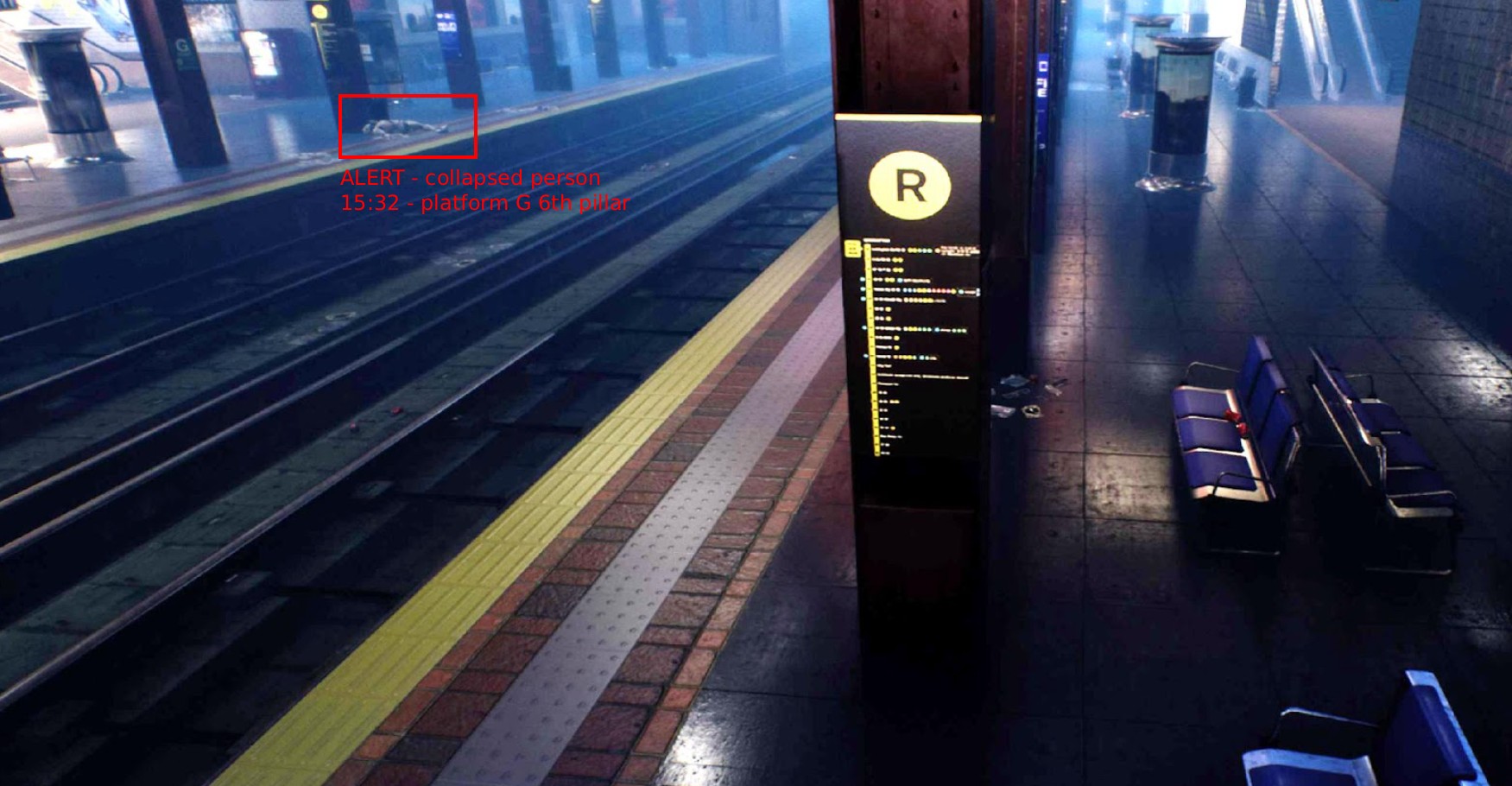
Vision AI that understands what is happening
Turn video, audio, and sensor data into clear, actionable information. OneBonsai Vision AI goes beyond simply detecting objects or movement. It helps organizations understand what is happening, decide whether it matters, and determine what should happen next.
Traditional computer vision can tell you what it sees. OneBonsai Vision AI goes further.
It helps you understand what an event actually means in context.
Beyond detection
Traditional computer vision can detect a person, vehicle, object, or movement. Our Vision AI platform goes further by understanding the wider situation and helping determine whether action is actually needed.
Better operational decisions
The system does not simply generate more alerts. It checks potential incidents against available footage and context before deciding whether they require attention. Better alerts, not more alerts.
Searchable operational memory
Video becomes searchable and useful long after it is recorded. Teams can find specific events, retrieve relevant clips, summarize what happened, and generate reports without manually reviewing hours of footage.
Human judgment stays central
The platform reduces noise, adds context, and brings the most important events to the attention of operators first. AI supports people in making faster, better-informed decisions rather than replacing human judgment.
From cameras to clear decisions
The platform takes information from cameras, audio, and sensors, understands what is happening, checks whether it matters, and turns it into useful alerts, reports, searches, and workflows.
Operational Pipeline
Multimodal Sensing
The platform connects multiple sources of information at the same time, including IP cameras, microphones, IoT sensors, and edge devices. By bringing these different inputs together, the system can understand the complete situation instead of analysing each source separately.
From seeing events to understanding what they mean
OneBonsai Vision AI goes beyond traditional computer vision. It combines real-time monitoring with contextual understanding, risk verification, and automated workflows. Instead of just detecting objects, the system understands whether an event matters, how urgent it is, and what should happen next.
Connected to your knowledge
Can work with your internal procedures, safety rules, threat libraries, and operational knowledge
Understands context
Looks at the wider situation rather than simply identifying objects
Flexible
Can be configured to recognize many different types of situations and operational events
Deployable anywhere
Available in the cloud, at the edge, on-premise, or in fully isolated environments
Verified alerts, evidence, reports, and workflows
Verified alerts, supporting evidence, reports, and workflow actions
Platform services
APIs, configuration, monitoring, and system management
Supports integration with existing systems, platform monitoring, system health, logging, and controlled platform behaviour.
Inputs
Connects to multiple IP cameras, microphones, IoT sensors, and edge devices. Supports common industry standards and custom integrations.
Better alerts, not more alerts
Many environments generate more video and more automated alerts than any human team can realistically review. OneBonsai Vision AI helps reduce that noise. When a possible event is detected, the system can check the relevant footage and available context before deciding whether the situation genuinely requires attention. The goal is simple: reduce false alarms and give teams fewer, better, and more useful alerts.
Two-step verification
One part of the system detects a possible event. Another checks it against the footage and context before a conclusion is reached
Context-aware analysis
Helps determine whether an event is genuinely dangerous, harmless, expected, or simply unusual
Clear explanations
Provides understandable explanations of what happened and why it matters
Supported by evidence
Alerts can include the relevant footage and information used to reach the conclusion
Person detected in restricted zone B
Smoke-like pattern detected near conveyor 7
Motion detected in perimeter zone
Person detected in restricted zone B
Camera 14 · Zone B · 02:34 AM
Authorized maintenance worker performing scheduled task. Badge verified, work order confirmed.
Find important moments without watching hours of footage
Modern Vision AI is not only about what is happening live. It also makes recorded footage much easier to use later. Instead of asking someone to manually review hours of video, teams can search for a specific event, retrieve the right clips, understand what happened, and generate reports with far less manual effort.
Video Search
Search stored video and event history using normal, everyday language
Automatic Summaries
Generate clear AI-powered summaries of incidents, shifts, or selected time periods
Report Generation
Create reports with relevant evidence, timelines, and context
Questions & Answers
Ask questions about past events and receive answers based on the available footage and data
"Show all forklift near-misses in warehouse 3 last week"
Forklift reversed into pedestrian path
Forklift blind-spot incident at intersection
Pedestrian entered forklift active zone
Where Vision AI creates the most immediate value
The greatest value comes in environments with many cameras or sensors, large amounts of footage, operational risks, and teams responsible for reviewing and responding to incidents.
Rail Safety
Monitor railway crossings, platforms, tracks, and other infrastructure for dangerous situations, unauthorized access, and safety incidents
Warehouse Operations
Identify forklift near-misses, unsafe interactions between people and vehicles, restricted-zone access, and safety compliance issues
Industrial Monitoring
Monitor equipment conditions, safety zones, PPE compliance, and operational processes
Smart-City Operations
Support traffic monitoring, public-space safety, crowd management, and infrastructure protection
Logistics Hubs
Improve visibility over loading docks, vehicle movements, inventory areas, and operational efficiency
Critical Infrastructure
Monitor sensitive areas, detect unusual activity, support access control, and combine information from multiple cameras and sensors
More than traditional computer vision
Traditional computer vision remains an important part of the technology. It is highly effective at detecting objects, people, vehicles, and movement. But on its own, it often requires fixed rules and human interpretation to understand what a detected event actually means. OneBonsai Vision AI adds context, verification, clear explanations, searchable memory, and workflow integration.
Object labels
Understanding of the wider situation
Raw detections
Verified conclusions
Objects highlighted on screen
Clear, natural-language explanations
Limited searchable context
Searchable operational memory
Manual follow-up
Connected actions and automated workflows
Object labels
Detects objects and assigns predefined labels. The wider context of the situation still needs to be interpreted separately.
Understanding of the wider situation
Understands the wider situation: who or what is present, what is happening, whether it is expected, and whether action is required.