VR training for nursing and emergency care
VR nurse and paramedic training
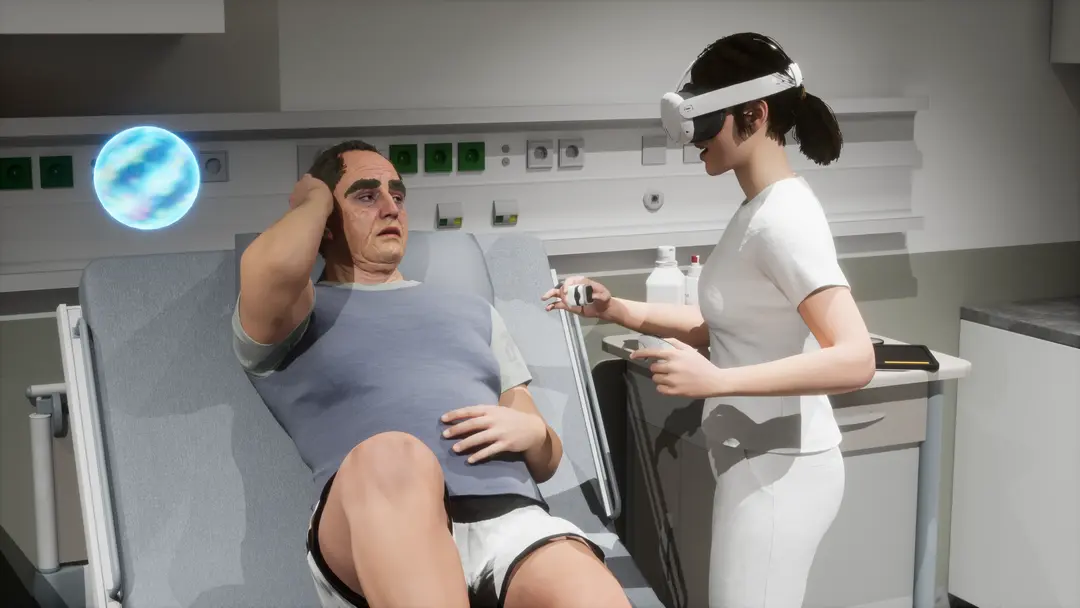
Nurses and paramedics practise clinical procedures and emergencies on virtual patients whose condition changes, without any risk to a real one. The University Hospital Bonn uses our VR programme to train 1,600 nursing staff and students.
Who it is for
- Hospitals onboarding large groups of new nursing staff
- Nursing schools and universities
- Ambulance services and paramedic training institutes
- Simulation centres that want to train more people than their lab can hold
What people practise
Training starts with strict hygienic preparation, such as hand disinfection and gloving, before the core task.
Patient observation
Measuring blood pressure, pulse, temperature and oxygen saturation, and logging the findings on a virtual documentation tablet.
Infusion preparation
Medication calculations and infusion set-up under sterile conditions, including troubleshooting a clogged catheter.
Pain recording and chronic wounds
Assessing a patient avatar that shows realistic pain reactions, and inspecting and dressing chronic wounds.
Emergencies under time pressure
Paramedics treat patients in critical condition, from cardiac arrest to trauma, applying interventions such as the ABCDE procedure while the patient can deteriorate.
Aggressive or distressed patients
AI-driven virtual patients respond with realistic emotions to what the trainee says and does, to practise de-escalation and empathy.
How it works
- 01
Standalone headsets
The nurse training programme runs on Meta Quest 3 and Pico 4 Enterprise headsets, in a digital twin of a patient room.
- 02
The instructor stays in control
A virtual instructor platform lets trainers follow students live, step in to help and set patient parameters such as vital signs, skin colour and breathing before a session.
- 03
Built on instructional design
The modules follow the 4C/ID framework, breaking complex tasks into procedural information and part-task practice. Training is multilingual, in German and English.
- 04
Results in your LMS
Integration with learning management systems lets the hospital capture training data and track results over time.
Results
1,600
nursing staff and students at the University Hospital Bonn get the same standardised training, without risk to patients.
Virtual Reality Nurse Training Program (VRNTP) for UKBParamedic trainees reported feeling better equipped for chaotic real-world situations, and instructors saw stronger engagement than with traditional methods.
VR Paramedical TrainingHealthcare staff reported feeling better prepared and less anxious about aggressive patient encounters.
Deescalation Training for Medical Personnel“The emergency scenarios felt real and taught me to make fast decisions under pressure.”
Nursing and emergency-care training we have delivered
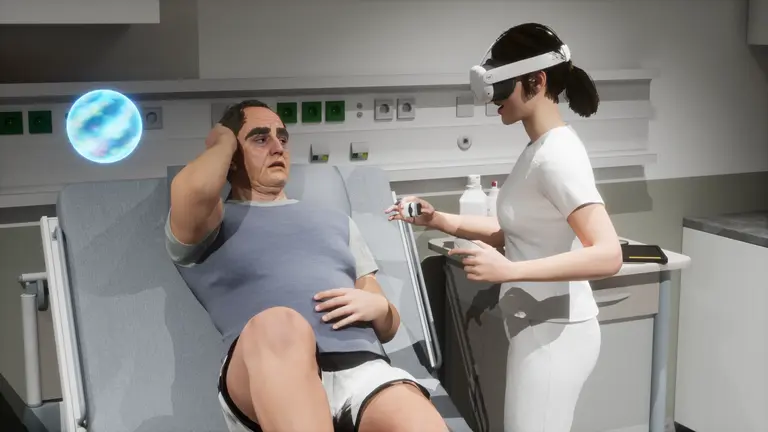
Virtual Reality Nurse Training Program (VRNTP) for UKB
An immersive, multilingual VR training platform developed for the University Hospital of Bonn (UKB) to safely and efficiently train 1,600 nursing staff and students in critical medical procedures using highly realistic, dynamic patient simulations.
Read the case study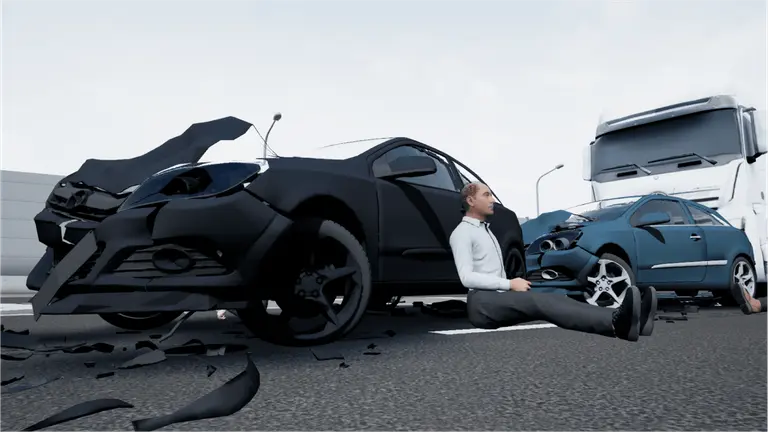
VR Paramedical Training
Lifelike VR emergency scenarios that prepare paramedics to make fast, confident, and life-saving decisions.
Read the case study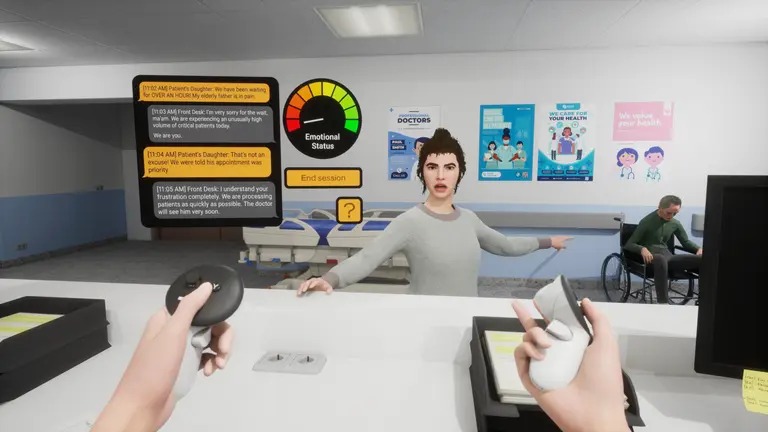
Deescalation Training for Medical Personnel
AI-driven VR training that prepares healthcare staff to safely manage aggression and stressful patient interactions with confidence.
Read the case study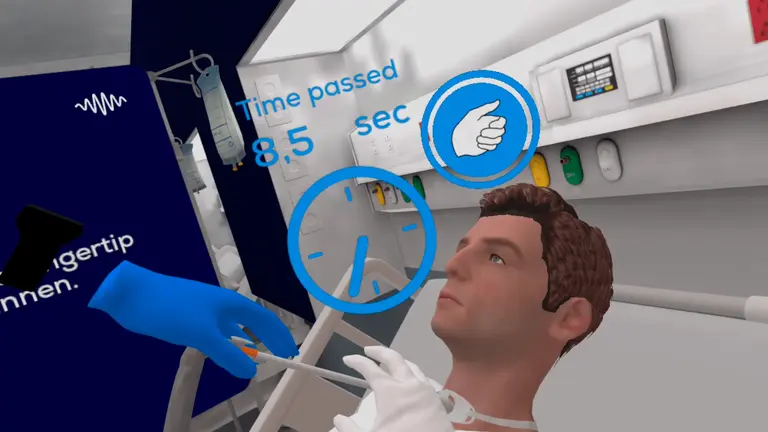
TracheoCare Training
VR training that prepares healthcare professionals to perform tracheostomy care with confidence and precision.
Read the case studyQuestions and answers
- What is VR nurse training?
- VR nurse training lets nursing staff and students practise clinical procedures, such as patient observation, infusion preparation and wound care, on virtual patients in a digital copy of a patient room. Mistakes carry no risk for a real patient, and every student gets the same standardised training.
- Which headsets does it run on?
- The nurse training programme built for the University Hospital Bonn runs on Meta Quest 3 and Pico 4 Enterprise headsets.
- Can an instructor follow and steer a session?
- Yes. Trainers can monitor students live, step in to help and adjust patient parameters such as vital signs, skin colour and breathing. In the paramedic training, instructors can also add complications during a scenario.
- Can training results go into our learning management system?
- Yes. LMS integration lets the hospital capture training data and track student results over time.
- Is it available in several languages?
- Yes. The programme for the University Hospital Bonn supports multilingual training in German and English.
- Do you also offer ready-made first-aid training?
- Yes. The VR First Aid Training module is available off the shelf by subscription, for workplace first aid rather than clinical nursing.
See the nurse and paramedic training
Tell us who you train and which procedures matter most. We show you the modules and what a roll-out would involve.