Deescalation Training for Medical Personnel
AI-driven VR training that prepares healthcare staff to safely manage aggression and stressful patient interactions with confidence.

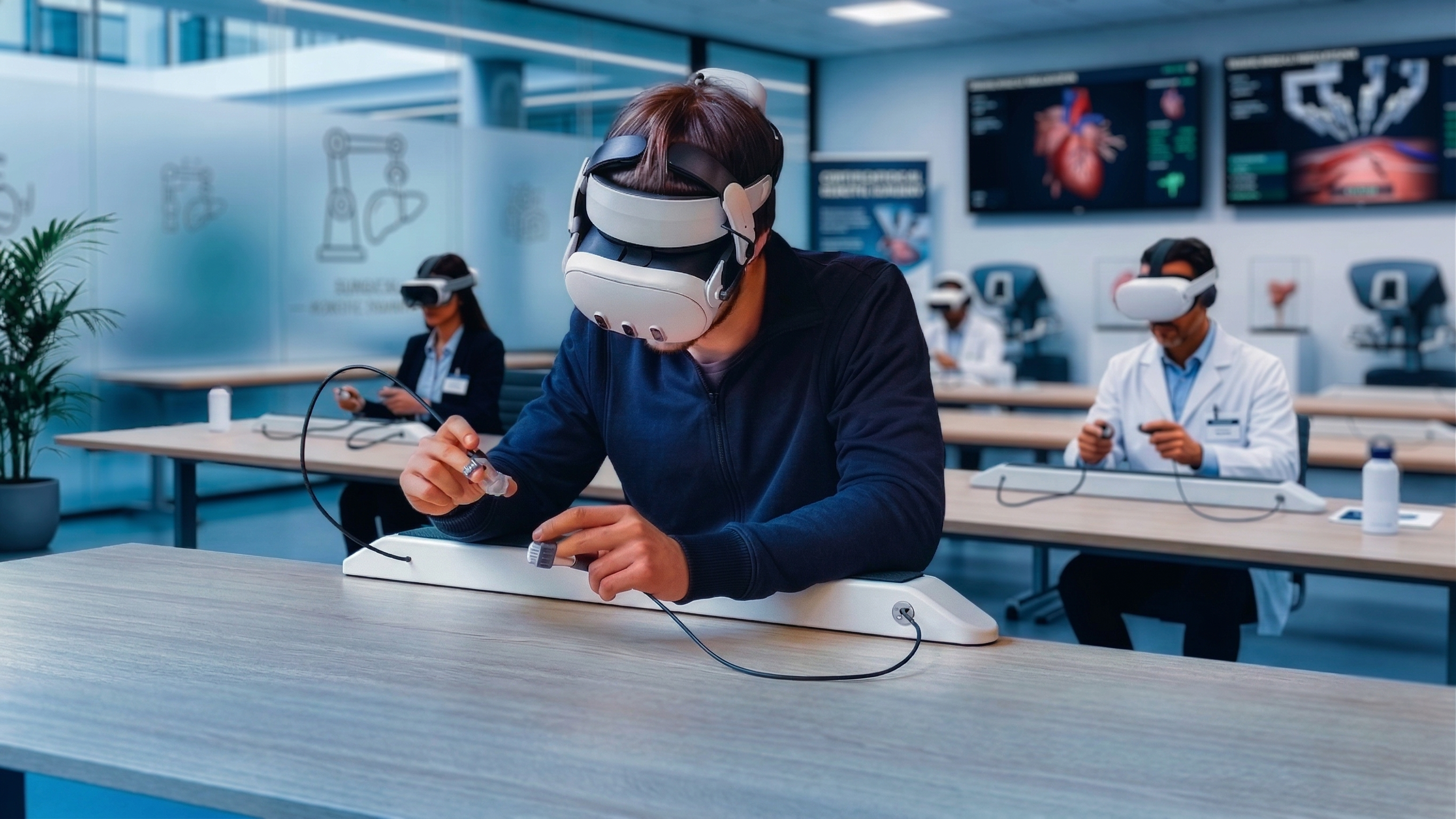
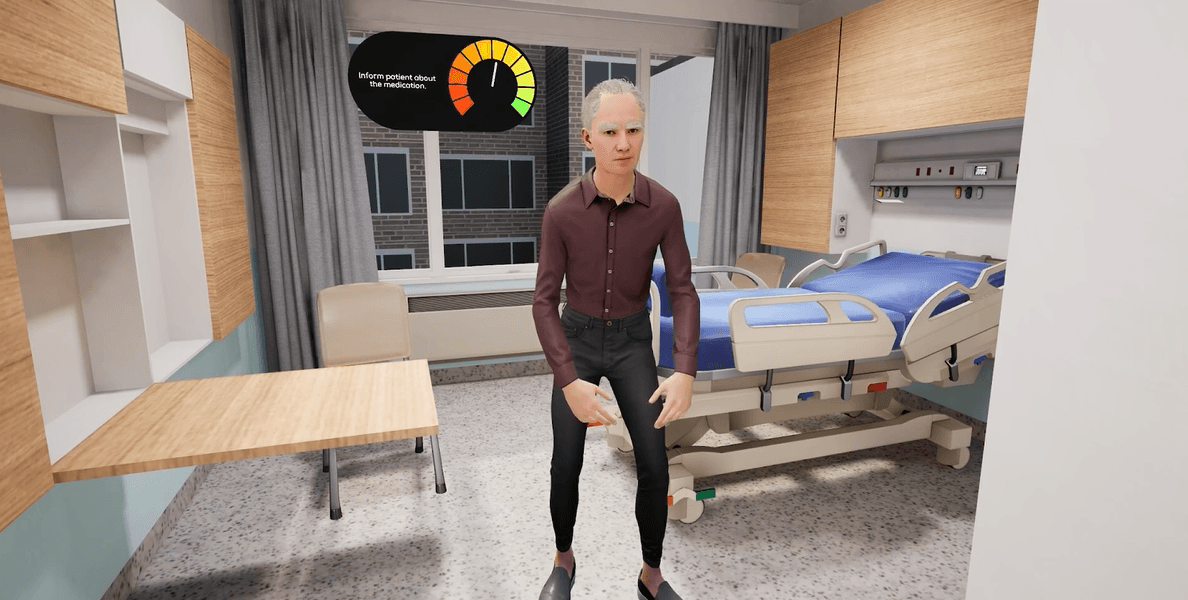
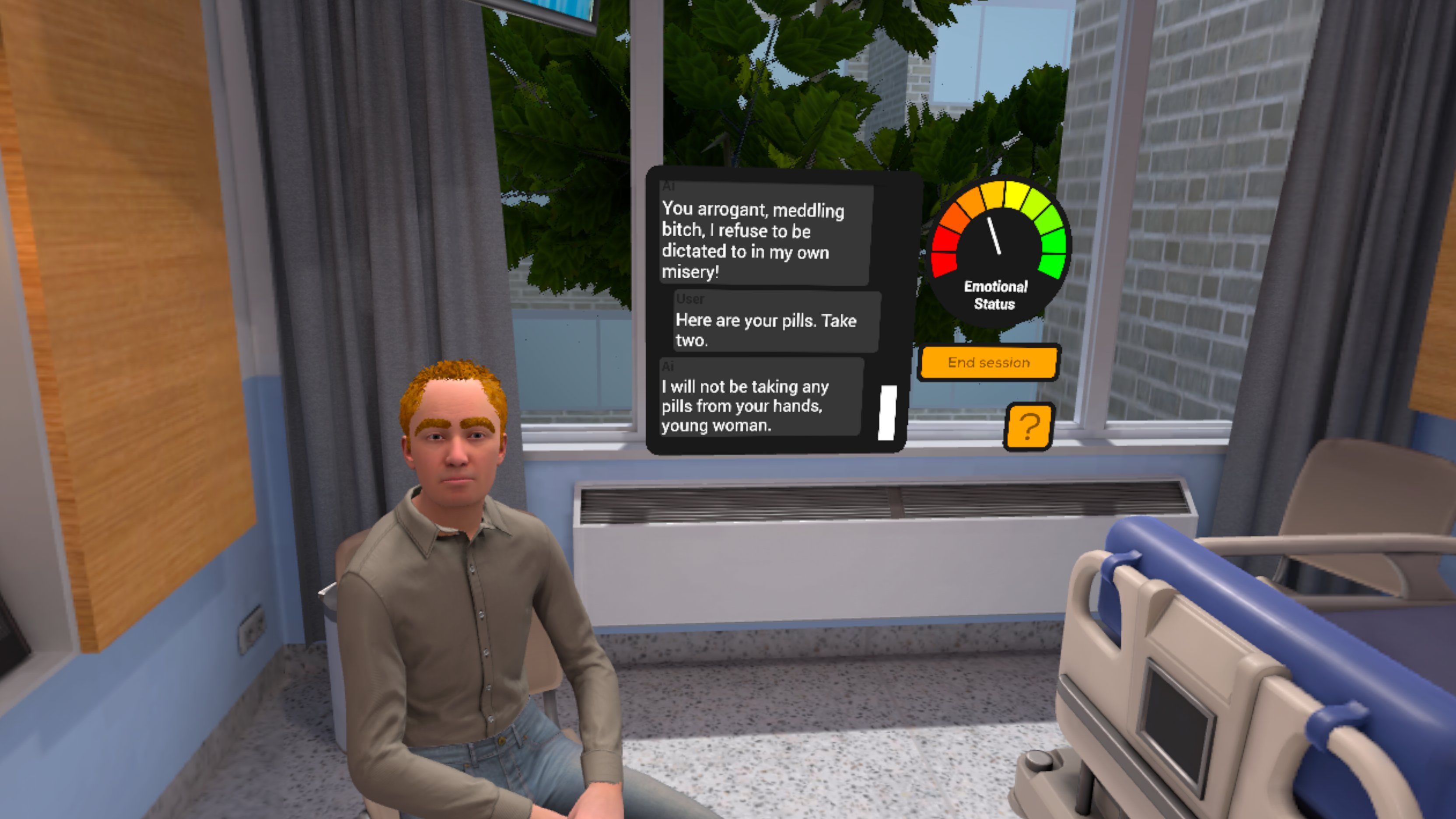
OneBonsai created an AI-powered VR training system to help medical students and professionals practice handling aggressive or distressed patients in a safe environment. The solution uses generative AI avatars that respond with realistic emotional states and adapt dynamically to the trainee's behavior, allowing participants to build confidence in de-escalation, communication, and empathy. By leveraging GPU-powered infrastructure and mobile VR headsets, the training is highly accessible, scalable, and effective in preparing healthcare staff for challenging real-world encounters.
Keep this case for your review
Download the complete Deescalation Training for Medical Personnel case as a PDF.
Case at a glance
Navigate the case section by section.
This map uses the published section headings below. Select a section to inspect the source detail.

Addressing Aggression and De-escalation in Medical Settings
Challenge

AI-Powered Virtual Patient Simulation
Solution

Leveraging Advanced Tech and Expert Collaboration
Approach

More Effective Training and Real-World Readiness
Outcome
Challenge
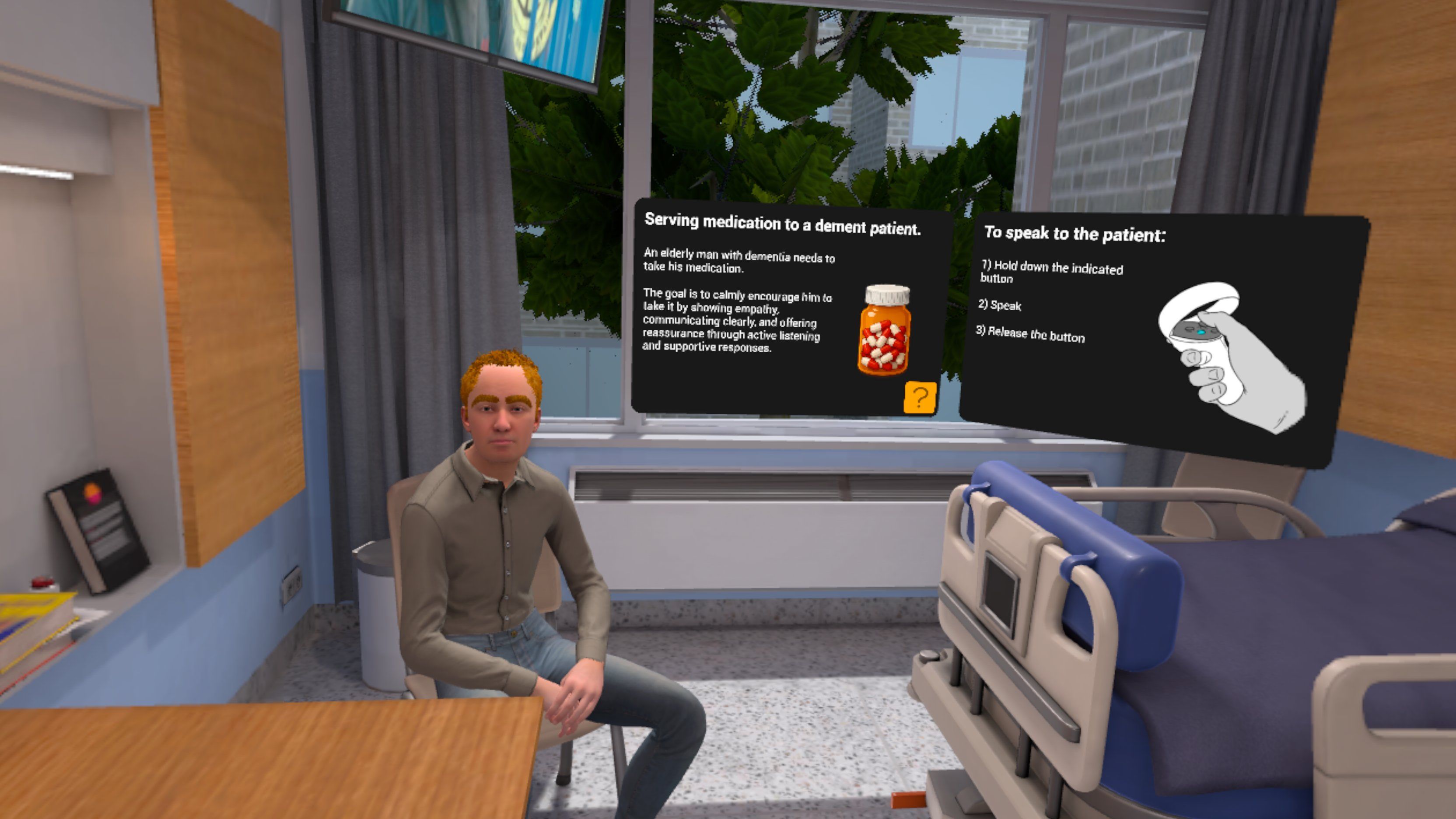
Healthcare workers frequently face aggressive, distressed, or emotionally volatile patients, yet traditional training methods fail to prepare them for the intensity and unpredictability of real-world confrontations. Classroom-based roleplay lacks emotional realism, and opportunities to practice with actual patients are limited and ethically constrained. Medical students and professionals needed a training tool that could simulate realistic patient aggression and emotional distress, allowing them to practice de-escalation, communication, and empathy skills in a safe, repeatable environment.
“Our staff were often unprepared for aggressive patients, and traditional training lacked the realism to build real confidence.”
Solution
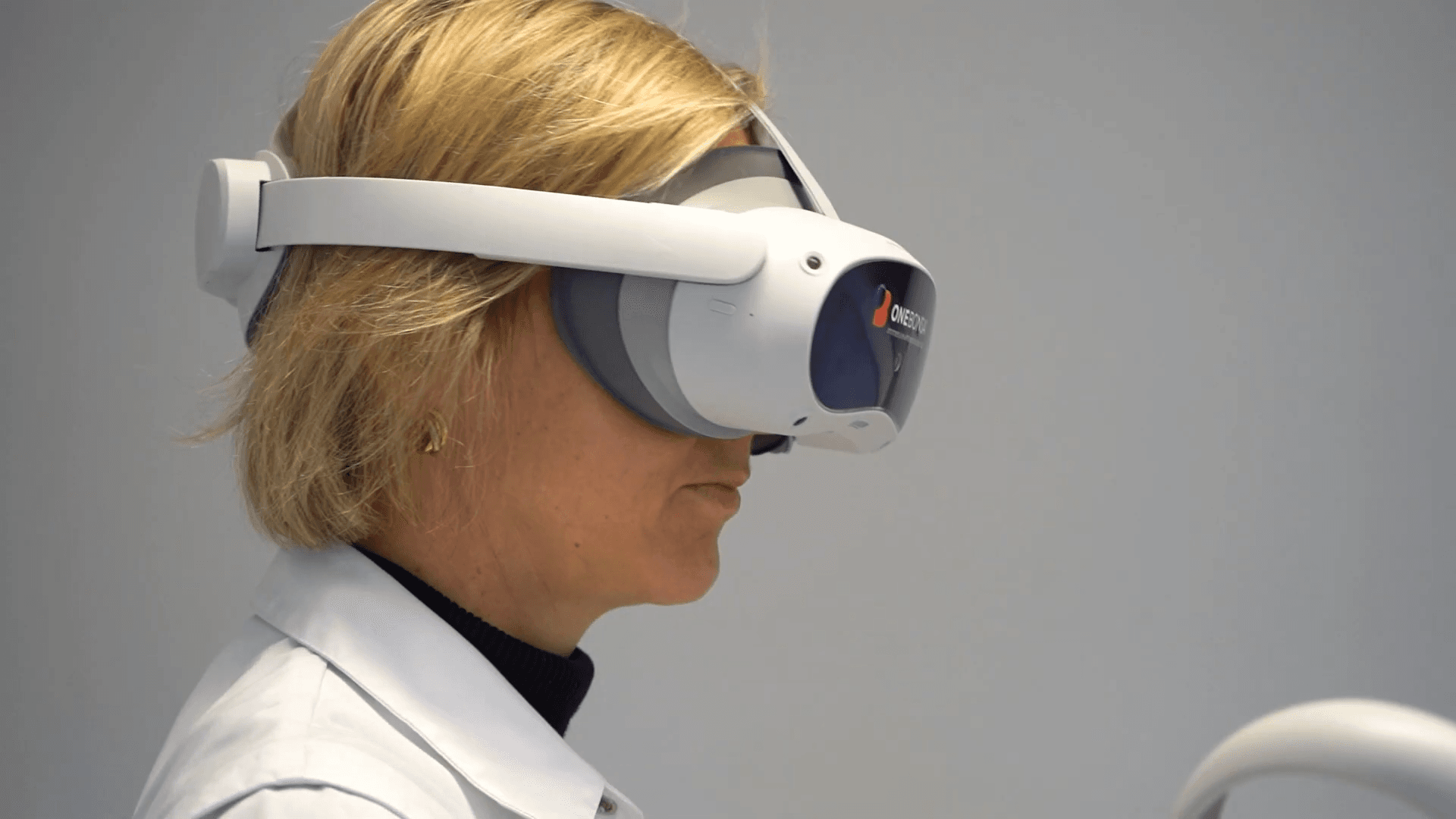
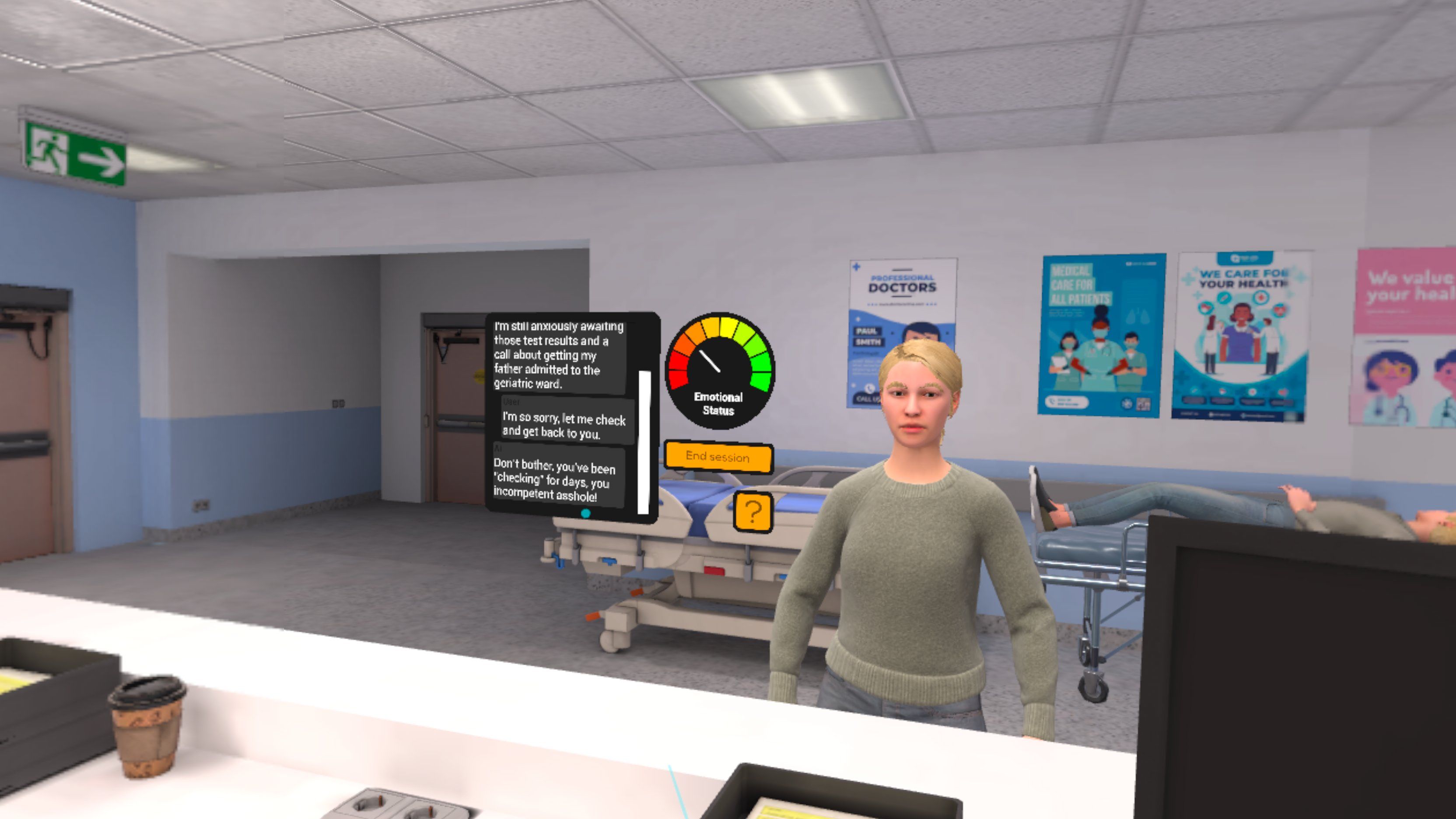
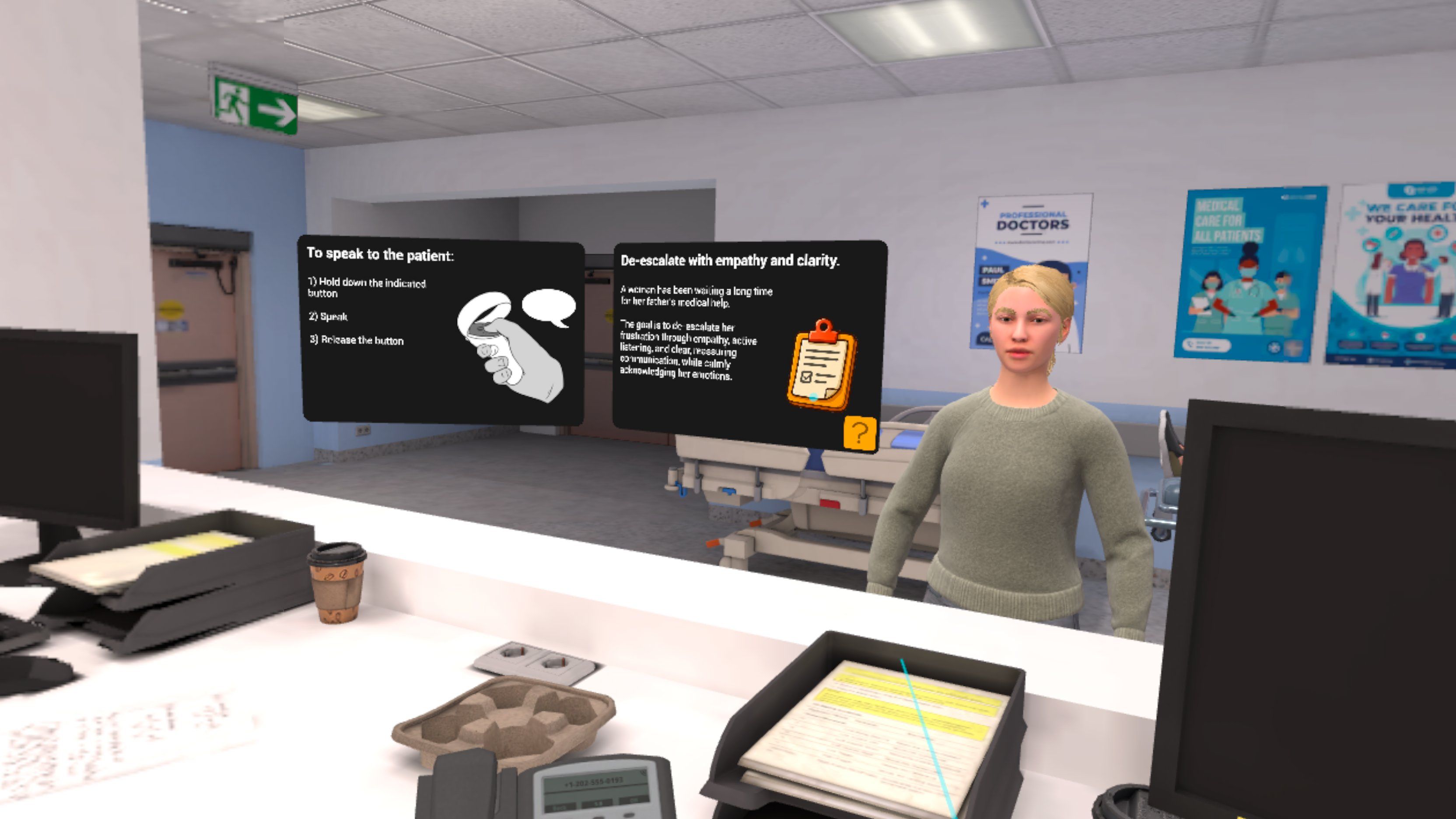
OneBonsai developed an AI-powered VR training system featuring generative AI avatars that simulate patients with realistic emotional states, including anger, fear, confusion, and distress. These virtual patients respond dynamically to the trainee's verbal and non-verbal behavior, creating authentic and varied interaction scenarios. The system runs on GPU-powered cloud infrastructure and is accessible through mobile VR headsets, making it easy to deploy across hospitals, medical schools, and training centers. Each session provides trainees with immediate feedback on their de-escalation techniques and communication effectiveness.
Approach
The training scenarios were co-designed with healthcare professionals, psychologists, and de-escalation experts to ensure clinical relevance and pedagogical effectiveness. Each virtual patient scenario targets specific competencies, from active listening and empathy to assertive boundary-setting and crisis intervention. The generative AI engine was trained to produce natural, context-appropriate emotional responses that adapt in real time to the trainee's actions. This creates a realistic training experience that challenges participants at their individual skill level, promoting genuine skill development through repeated practice.
“Practicing with realistic virtual patients can help me stay calm in real-life confrontations.”
Outcome
The AI-driven VR de-escalation training has demonstrated measurable improvements in healthcare workers' confidence and competence when handling aggressive patient encounters. Trainees report feeling better prepared, less anxious, and more empathetic after completing the program. The scalable, cloud-based architecture ensures consistent training quality across multiple institutions, while the adaptive AI provides personalized learning experiences that continuously challenge and develop each participant. The solution represents a significant advancement in preparing healthcare staff for the emotional demands of patient care.
Deescalation Training
Deescalation Training
Deescalation Training
Deescalation Training
“This VR tool strengthens both safety and quality of care by preparing staff for difficult situations.”
For healthcare simulation teams
Planning a healthcare simulation programme?
Discuss curriculum fit, deployment constraints and how your team will run the training.