Simulation development
Custom simulation software and training simulators
We build simulators for work that is too dangerous, too expensive or too rare to practise for real: robotic surgery, crane operation, firefighting aboard a frigate, mooring in the Port of Antwerp and driving under the influence. Real controls where they matter, and a virtual environment built with your own experts.
Who we build for
- Hospitals, surgical academies and medical schools
- Defence and naval forces
- Ports, logistics and heavy industry
- Road-safety organisations, schools and event organisers
Simulators we build
Every simulator combines a realistic virtual environment with the controls and procedures of the real job, so what people practise carries over to the real thing.
Medical and surgical simulation
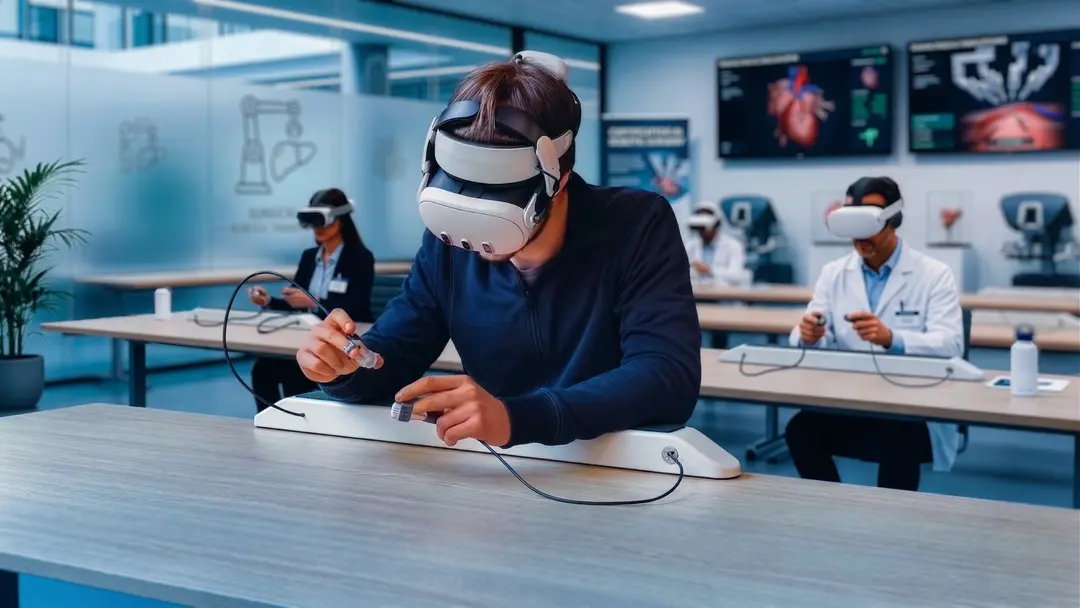
A portable robotic surgery trainer built with ORSI Academy, with custom controllers that mimic a robotic console, and AI-generated virtual patients for diagnosis training.
Equipment and vehicle simulators
A crane simulator with a physical control setup, a drunk driving simulator with a real steering wheel and pedals, and an e-bike simulator on a real bike.
Emergency simulation
Firefighting aboard a naval frigate, with fire and smoke, restricted visibility and a tracked fire hose, built with the Belgian Navy and RMA.
Digital twins of real sites
A digital twin of a harbour in the Port of Antwerp, where dock workers practise the full mooring procedure and see what a snapping cable does.
How a simulation project runs
- 01
Design sprint
We map the task, the risks and what people must be able to do afterwards, and agree what the simulator has to show and measure.
- 02
Built with your experts
Instructors and operators check every step. The naval simulator was built with naval officers and firefighting instructors; the surgery trainer follows ORSI's Proficiency-Based Progression method.
- 03
Real controls where they matter
When the feel of the equipment matters, the virtual environment is paired with physical controls: a crane control setup, a steering wheel and pedals, surgical controllers, a fire hose.
- 04
Built to travel
The simulators go where the people are: a trade-fair booth in Antwerp or Houston, a school visit, the docks or a training centre.
What the simulators changed
Surgeons practise core robotic skills such as suturing and knot-tying at home, before they touch a real console.
VR Robotic Surgery Training, ORSI AcademyThe Belgian Navy can standardise firefighting training across units and train crews repeatedly without live fire.
VR Naval Firefighting Training, Belgian NavyDock workers in the Port of Antwerp showed better hazard recognition and procedure compliance after the mooring simulation.
VR Mooring Training for the Port of Antwerp“VR provides us with options to train at scale. We therefore see it as a force multiplier.”
Simulators we have built
VR Robotic Surgery Training, ORSI Academy
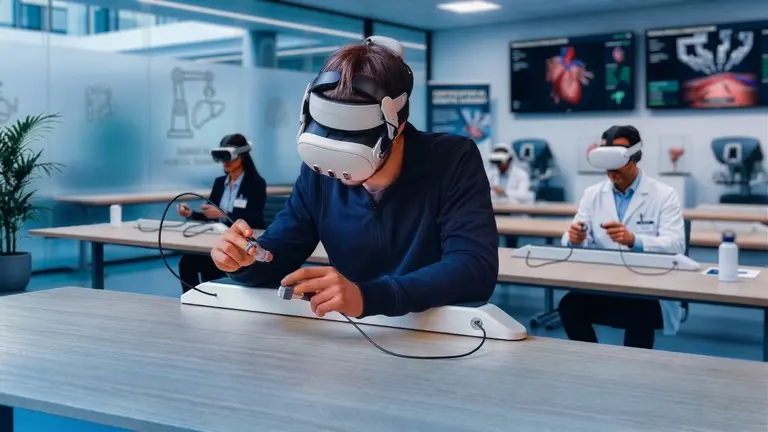
Portable VR robotic surgery training with ORSI Academy: surgeons practise suturing and knot-tying with custom controllers, at their own pace.
Read the case study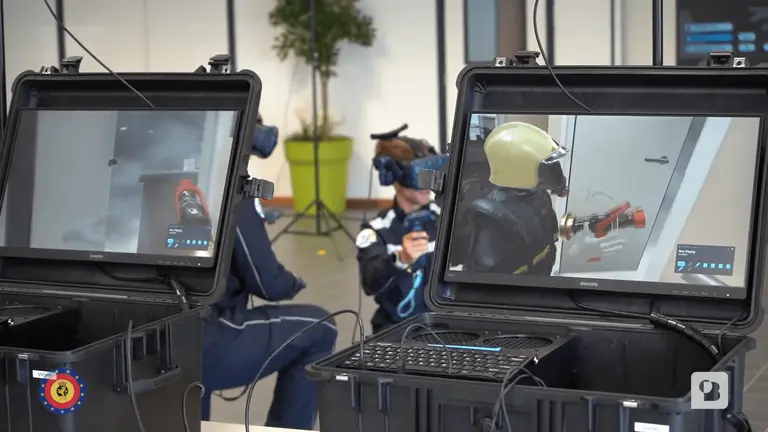
VR Naval Firefighting Training, Belgian Navy
VR naval firefighting for the Belgian Navy and Royal Military Academy: crews fight fires aboard a virtual frigate with a tracked fire hose.
Read the case study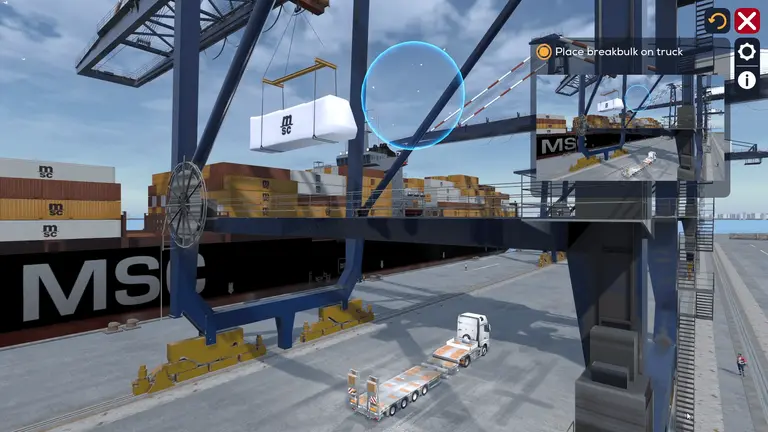
VR Harbour Crane Simulator Experience
A VR harbour crane simulator with physical controls, built as an event activation for booths in Antwerp and Houston and as an operator demo.
Read the case study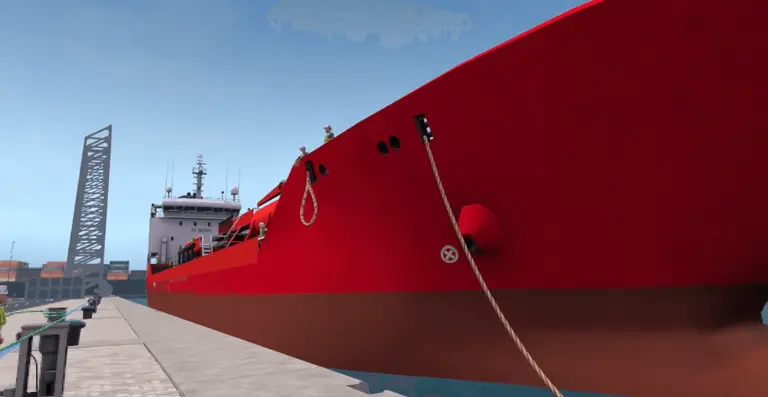
VR Mooring Training for the Port of Antwerp
VR mooring safety training for dock workers in the Port of Antwerp: a digital twin of the harbour shows what happens when a mooring line snaps.
Read the case study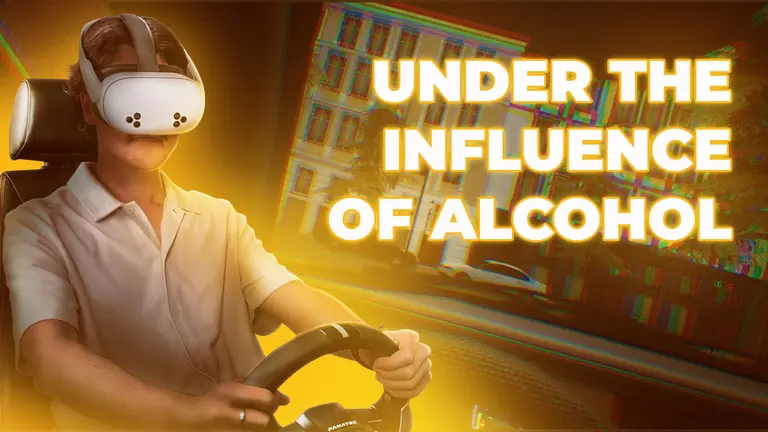
VR Drunk Driving Simulator for Young Drivers
A mobile VR drunk driving simulator built with Responsible Young Drivers: young people feel how alcohol and laughing gas slow their reactions.
Read the case study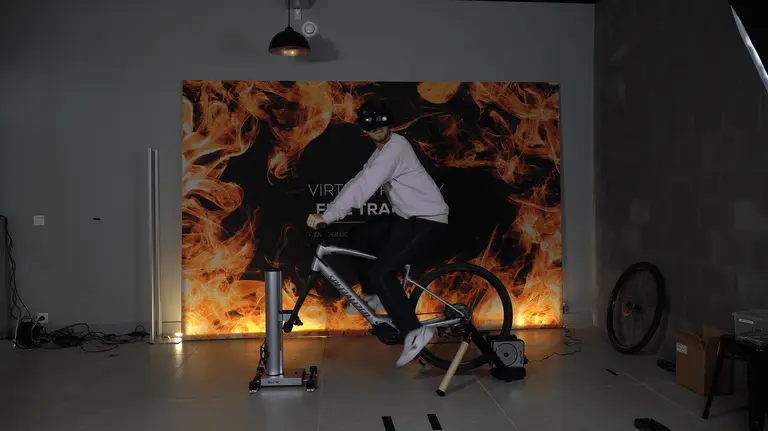
VR e-Bike Simulator for Road Safety
A mobile VR e-bike simulator on a real bike: young riders face dense city traffic and a controlled crash, to learn safe speed without real danger.
Read the case studyQuestions and answers
- What is simulation software development?
- It is building software that recreates a real task, machine or environment, so people can practise it without risk. OneBonsai designs the virtual environment, the scenarios and the feedback, and connects physical controls where the real feel of the equipment matters.
- What is the difference between a simulator and VR training?
- VR training teaches a procedure on a headset. A simulator also reproduces the equipment: a crane control setup, a steering wheel and pedals, or surgical controllers. Many of our projects combine both.
- Can you build a digital twin of our site?
- Yes. For mooring training in the Port of Antwerp we built a digital twin of the harbour setting, so dock workers practise in the place where they work. Your site or equipment can be modelled in the same way.
- Do you use AI in simulations?
- Yes, where it makes the simulation more realistic. The Digital Patient uses AI-generated virtual patients for diagnosis training, and our de-escalation training uses generative AI avatars of aggressive or distressed patients that react to what the trainee says and does.
- Which hardware do the simulators run on?
- That depends on the task. The mooring training runs on mobile VR headsets; the crane, driving and surgery simulators add physical controls. We advise on the hardware during the design sprint.
- Where is OneBonsai based?
- In Leuven, Belgium. We have built simulators together with the Belgian Navy and RMA, ORSI Academy and Responsible Young Drivers.
Tell us what you want to simulate
Describe the task, who needs to practise it and where the simulator would run. We reply with what is possible and what it involves.