VR training for law enforcement
Police VR training
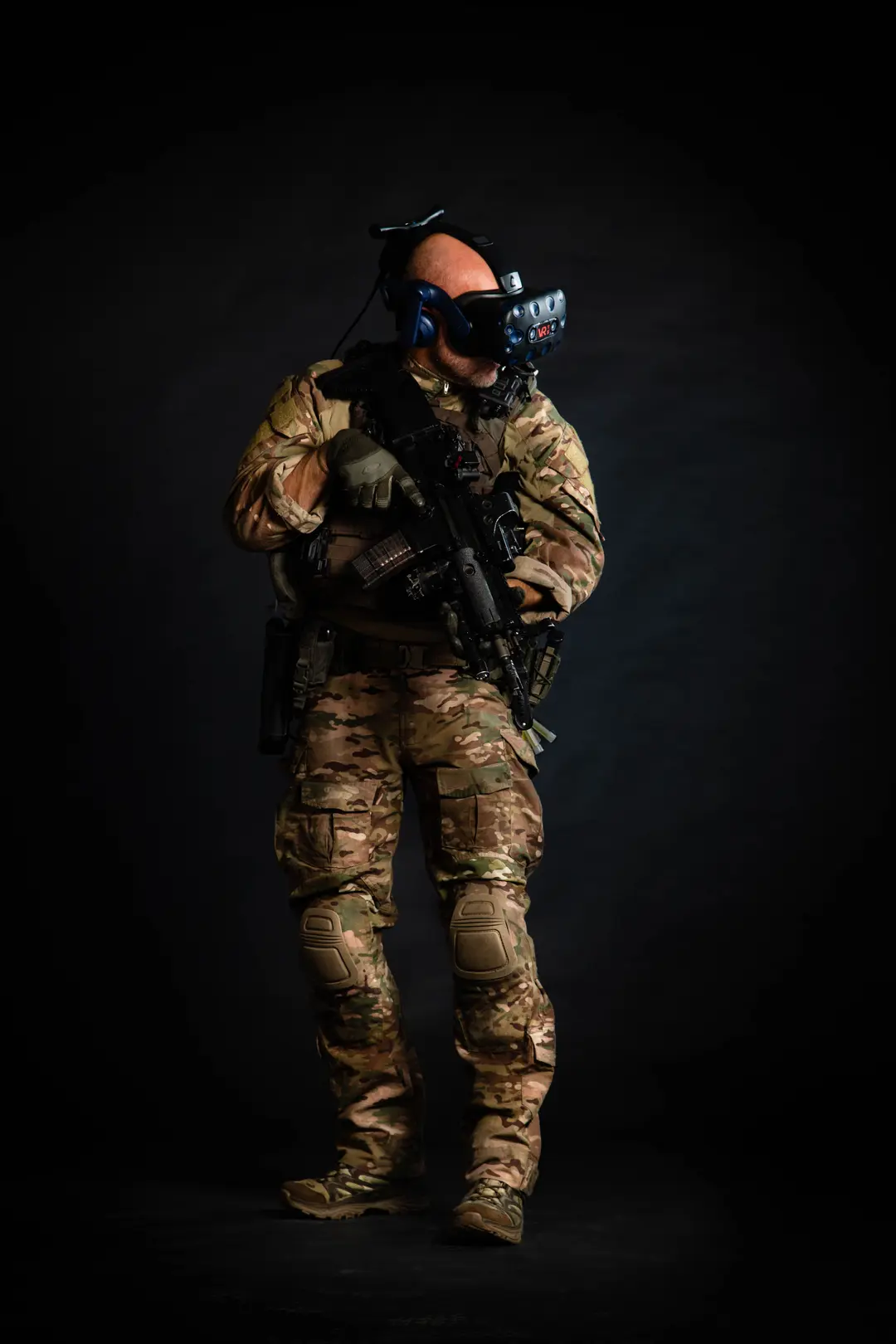
Officers rehearse interventions, de-escalation and team operations in virtual reality: the situations that are too dangerous, too expensive or too rare to stage for real. Our police training platform, VRTS, was co-developed with the Belgian Police.
Who it is for
- Police zones and national police services that want more practice time per officer
- Police academies and training centres that need repeatable, assessable scenarios
- Intervention and special units training coordinated team operations
- Instructors who want to build and adjust their own scenarios
What officers practise
Scenarios run from a single intervention to a coordinated team operation, and every one can be repeated, randomised and made harder as the trainee improves.
Decisions under pressure
Unpredictable situations with virtual suspects and bystanders, where a split-second decision separates escalation from resolution.
De-escalation and communication
Digital humans react to what the officer does, so calming a situation is something to practise, not only to discuss in a classroom.
Team operations
Several officers train in the same scenario at once, up to force-on-force exercises, to rehearse coordination and communication.
Weapon handling
Replica weapons with calibrated grip, weight and trigger, and modelled ballistics including penetration, ricochets and trajectory drop.
How it works
- 01
Fixed room or mobile kit
VRTS runs as a fixed installation in a training room or as a mobile kit that is set up and redeployed in under an hour. The training space is configurable from 4 × 4 m up to 30 × 30 m.
- 02
Instructors author the scenarios
Built-in editing tools let instructors create their own scenarios and scale the difficulty to the trainee's experience, with day and night lighting and randomised events.
- 03
Observe, review, debrief
Instructors watch live, annotate behaviour and run a structured after-action review. Performance metrics give an objective view of readiness.
What it changes
Removes the cost of ammunition, travel, ranges and logistics, so officers can train more often.
VR Police Training System (VRTS)Officers report feeling more confident de-escalating conflicts, deciding under stress and working as a team.
VR Police Training System (VRTS)Data-driven tracking replaces subjective assessment and gives commanders objective insight into readiness.
VR Police Training System (VRTS)“VR makes police training safer, more flexible, and better aligned with modern operational needs.”
Police and de-escalation training we have delivered
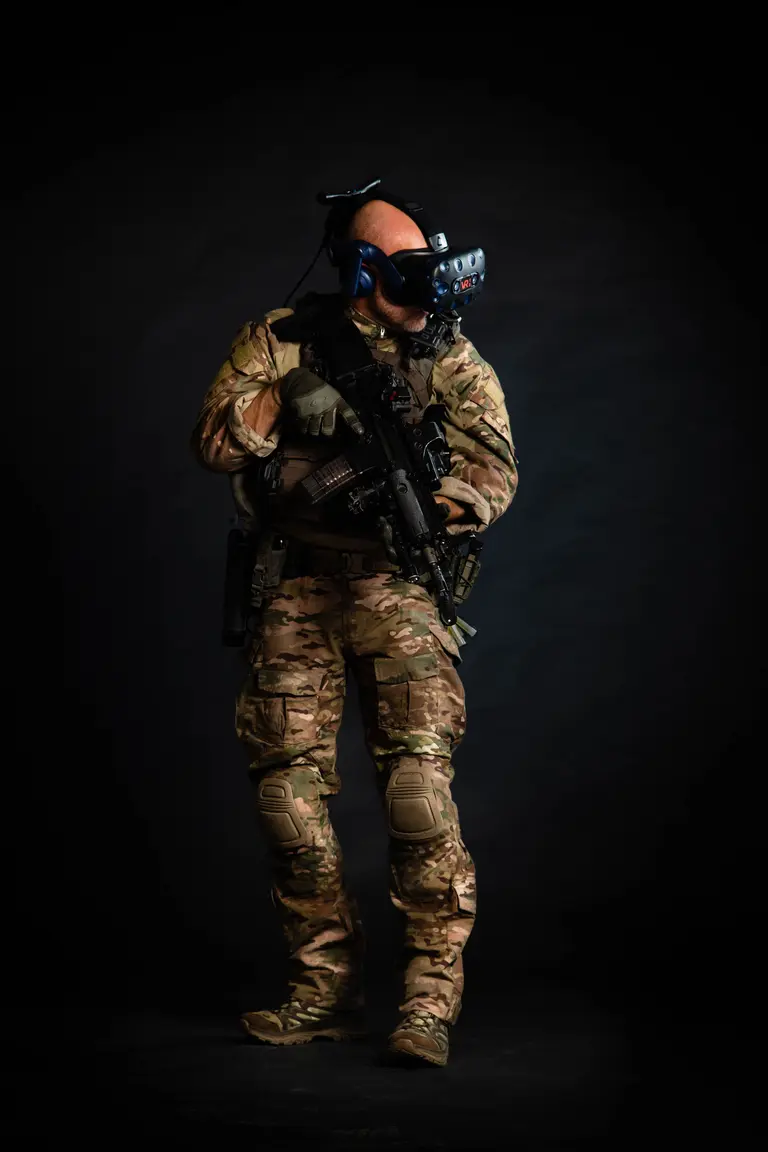
VR Police Training System (VRTS)
A purpose-built VR platform for immersive police and tactical training, co-developed with the Belgian Police.
Read the case study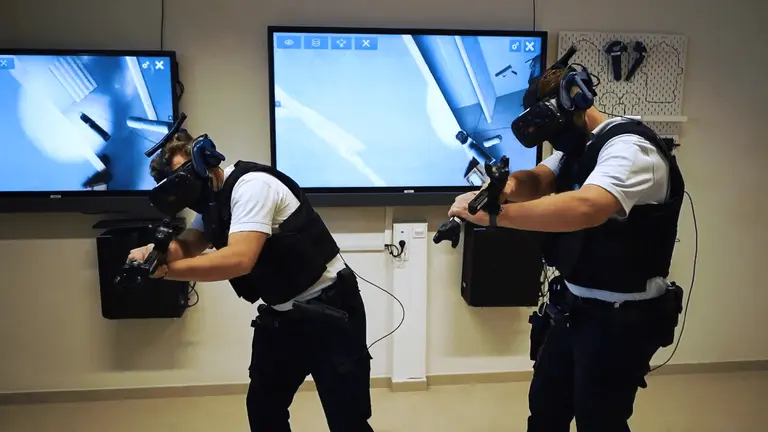
VR Police Training System
Immersive VR training that prepares police officers for complex, high-pressure scenarios through safe, repeatable practice.
Read the case study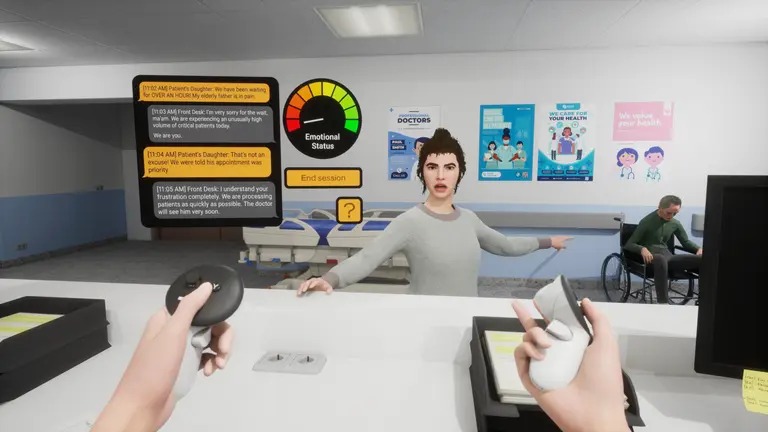
Deescalation Training for Medical Personnel
AI-driven VR training that prepares healthcare staff to safely manage aggression and stressful patient interactions with confidence.
Read the case studyQuestions and answers
- What is police VR training?
- Police VR training places officers in a virtual scenario with digital suspects, bystanders and colleagues, where they practise decisions, communication and tactics. Because it is virtual, a scenario can be repeated, randomised and made harder without the cost or risk of a live exercise.
- Who was the platform developed with?
- VRTS, OneBonsai's police training platform, was co-developed with the Belgian Police. Law-enforcement professionals contributed on tactical movement, communication under pressure, firearm mechanics and stress simulation.
- How much space does it need?
- The training space is configurable from 4 × 4 m up to 30 × 30 m. VRTS runs as a fixed installation or as a mobile kit that can be set up and redeployed in under an hour.
- Can instructors create their own scenarios?
- Yes. Instructors author custom scenarios with built-in editing tools and scale the difficulty to the trainee's experience.
- Can a whole team train together?
- Yes. The platform supports individual interventions as well as coordinated team operations, including force-on-force settings.
- Do you also build de-escalation training outside policing?
- Yes. For healthcare staff we built an AI-powered VR training in which virtual patients respond with realistic emotional states to what the trainee says and does.
See the police training platform
Tell us which unit or academy you train and what you want officers to practise. We show you the platform and what a deployment would involve.