Ready-made VR training modules or training built around your own procedures? What each covers, what each asks of you, and a checklist to decide.
There are two ways to buy VR training. You can subscribe to a module that already exists, or you can have training built around your own procedures, equipment and environment. The first can start as soon as you have a headset. The second is a project.
It is easy to start with the wrong one: to commission a custom build for a topic that a ready-made module already covers, or to stretch a generic module over a procedure that exists only in your own organisation. This post is about telling the two situations apart before you spend anything.
What ready-made modules cover
A ready-made module teaches something that is the same almost everywhere. A fire extinguisher works the same way in a bank and in a bakery. So does a recovery position, a blocked emergency exit and a phishing email.
We offer four modules this way:
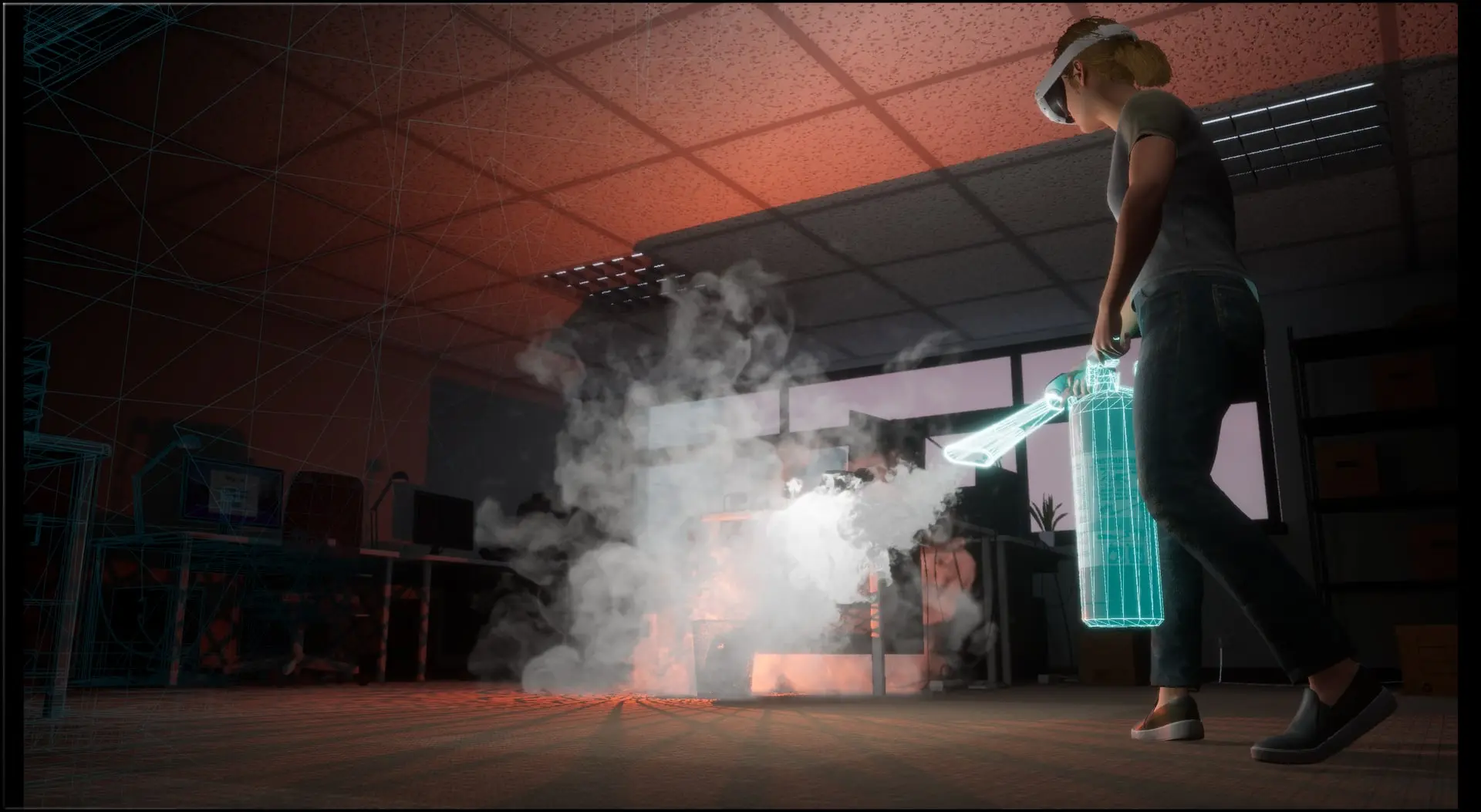
- VR Fire Training: alarm, emergency call, extinguisher practice and evacuation, in more than 27 scenarios.
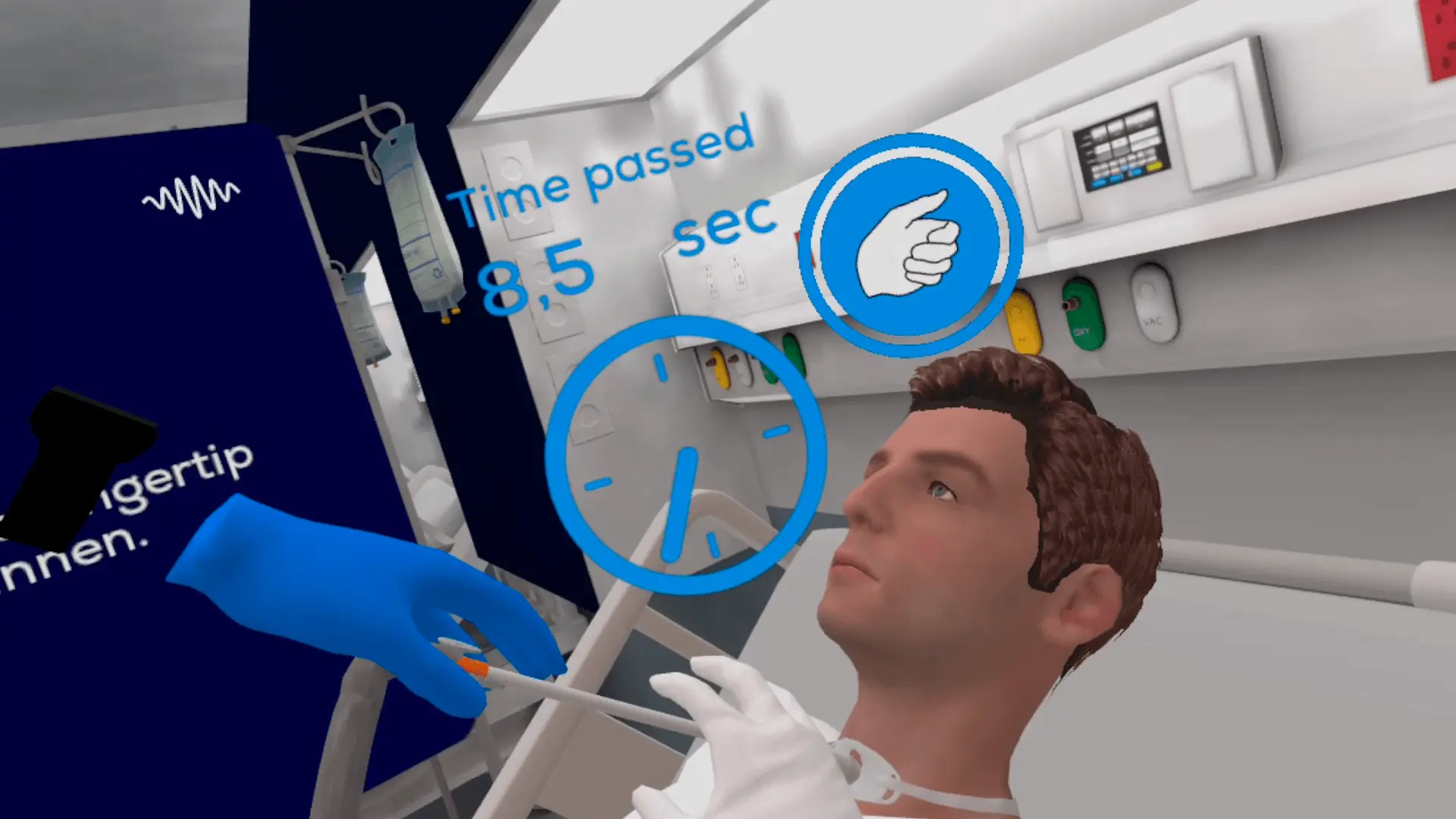
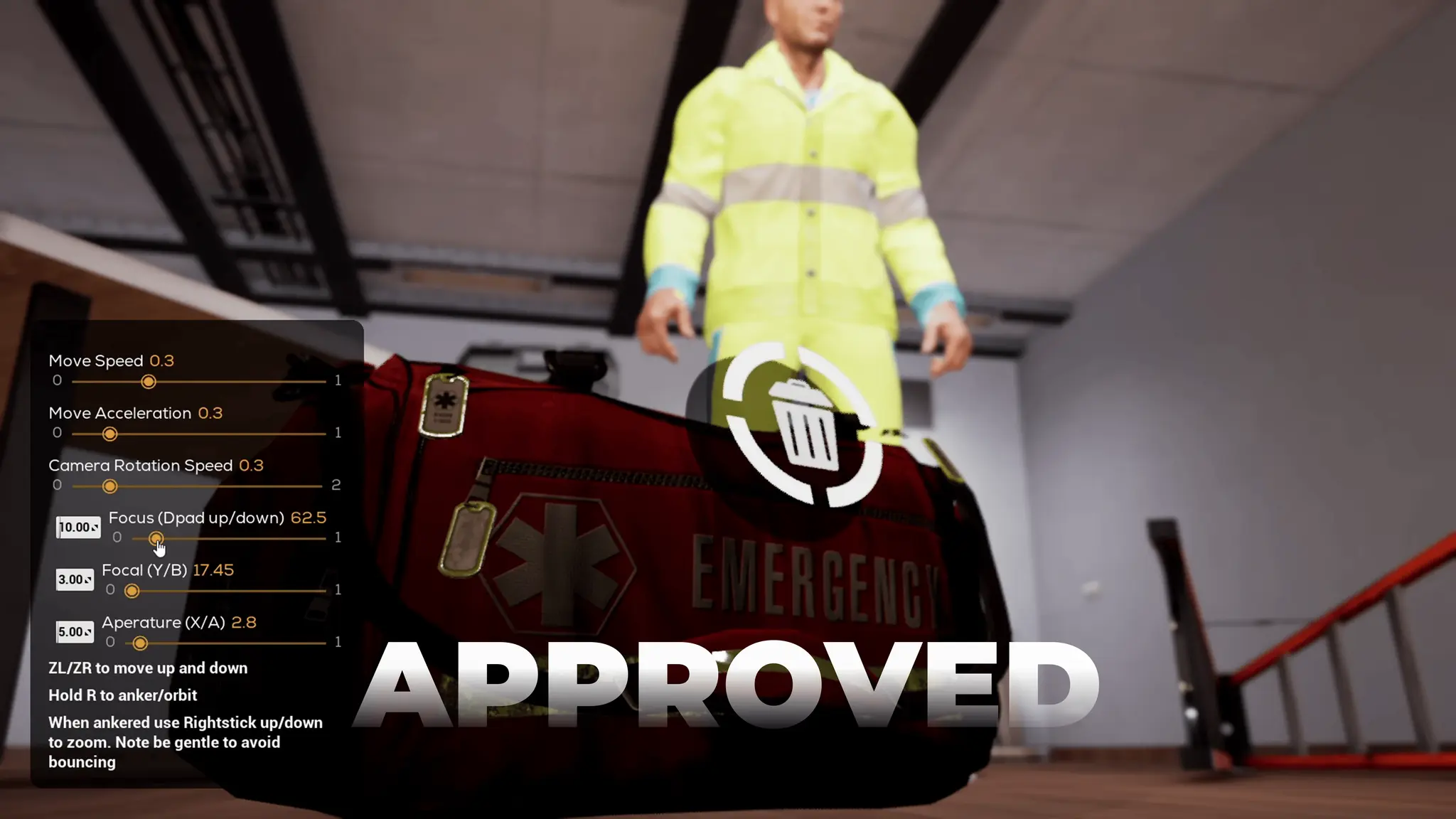
- VR First Aid Training: more than 17 emergency scenarios, from burns, fractures and severe bleeding to a heart attack.
- VR Hazard Spotting: recognising unsafe conditions in industry-specific environments.
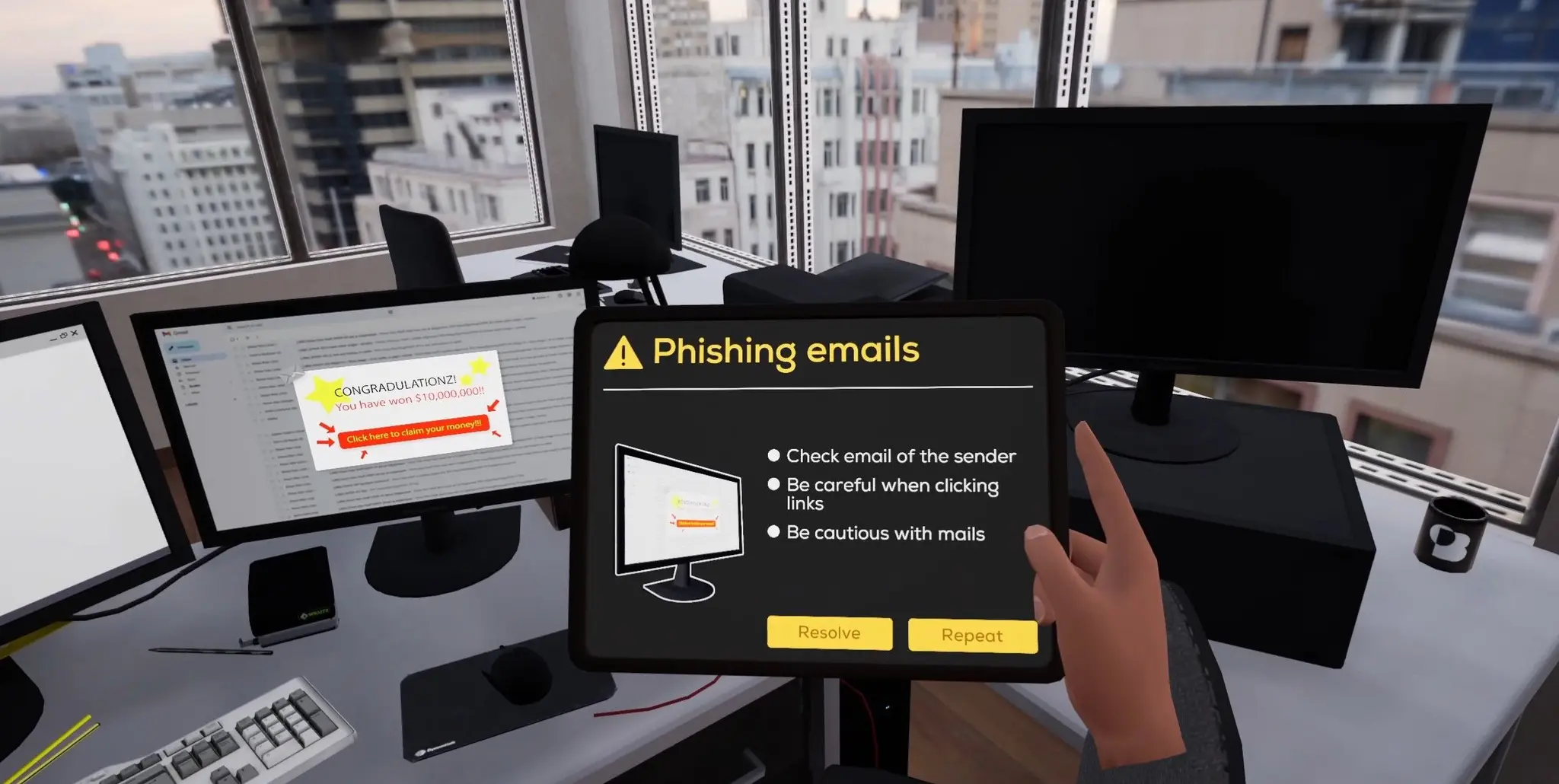
- VR Cybersecurity Training: phishing simulations and password and access management.
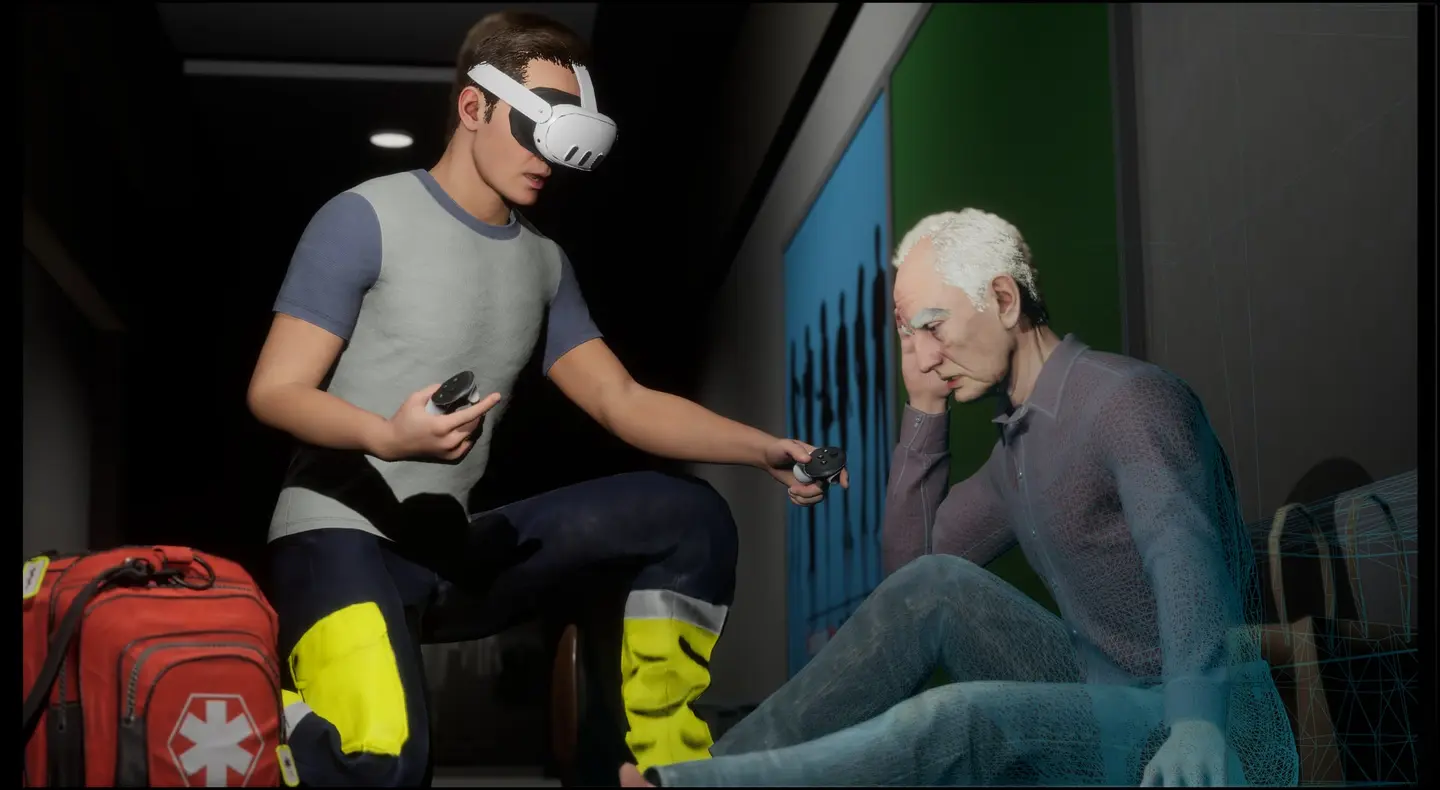
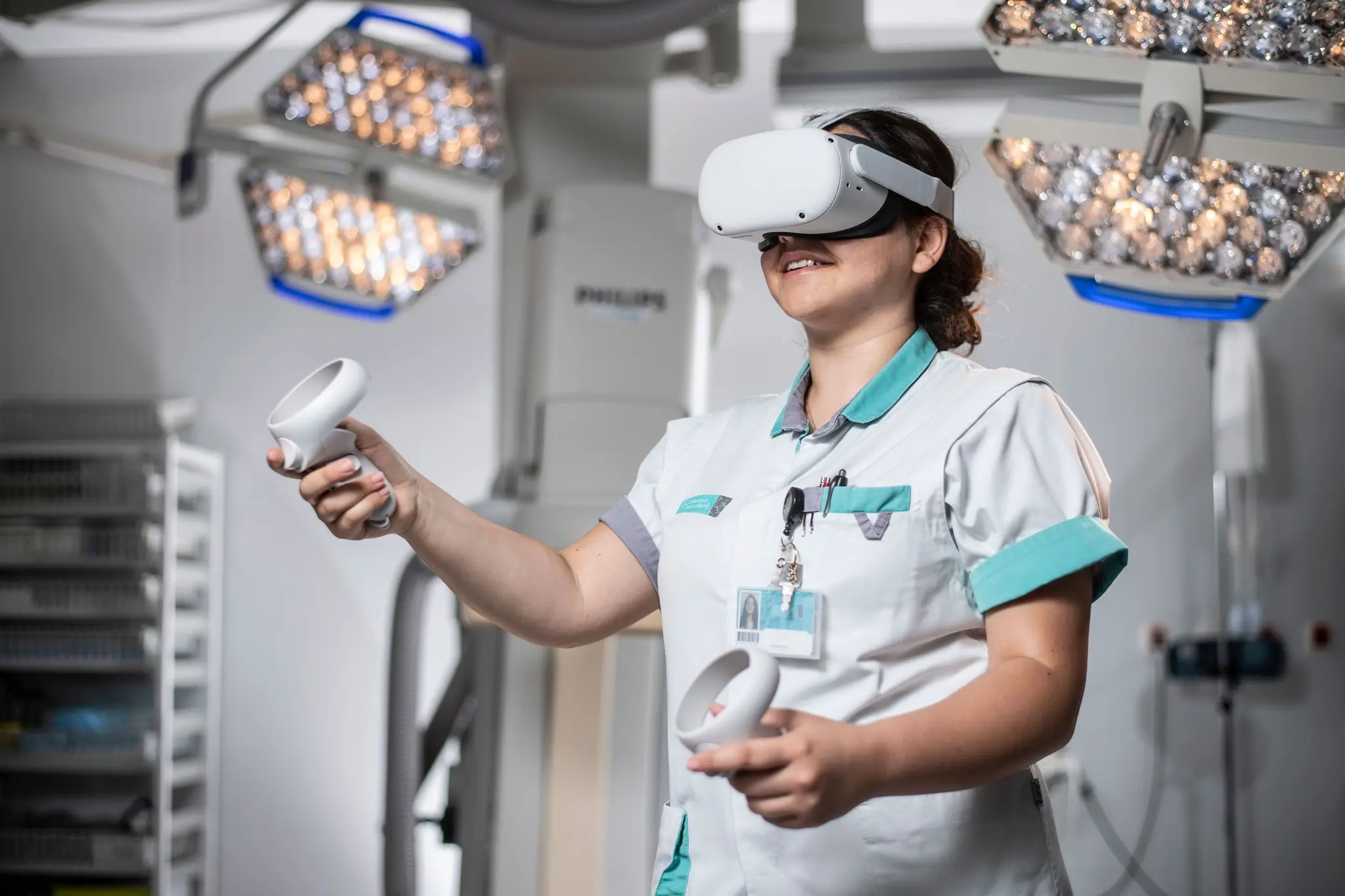
They are sold as a subscription per headset, monthly or yearly, and can be cancelled at any time. Each has a free demo. They run on Meta Quest and Pico headsets, and also on tablet and PC, in more than ten languages, with performance tracking included. The prices are on the plans and pricing page.
Colruyt Technics is an example of how far ready-made goes. It uses the ready-made fire safety and hazard spotting modules, with 12 headsets, and trains groups of up to 20 employees per session. The effort went into organising group sessions across its sites, not into building software.
Signs that you need custom training
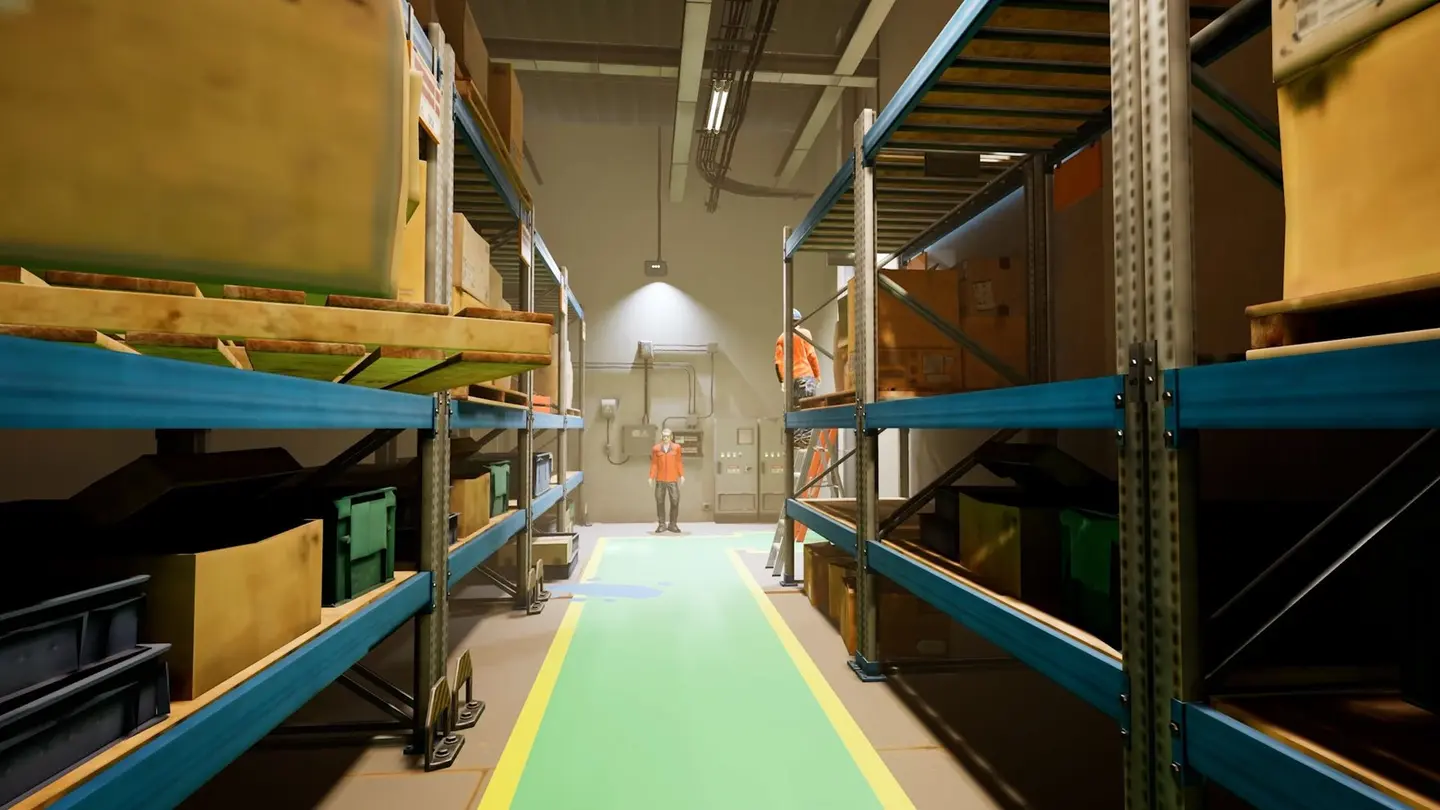
Custom training earns its cost when what you need to teach exists only in your organisation. Four signs point that way.
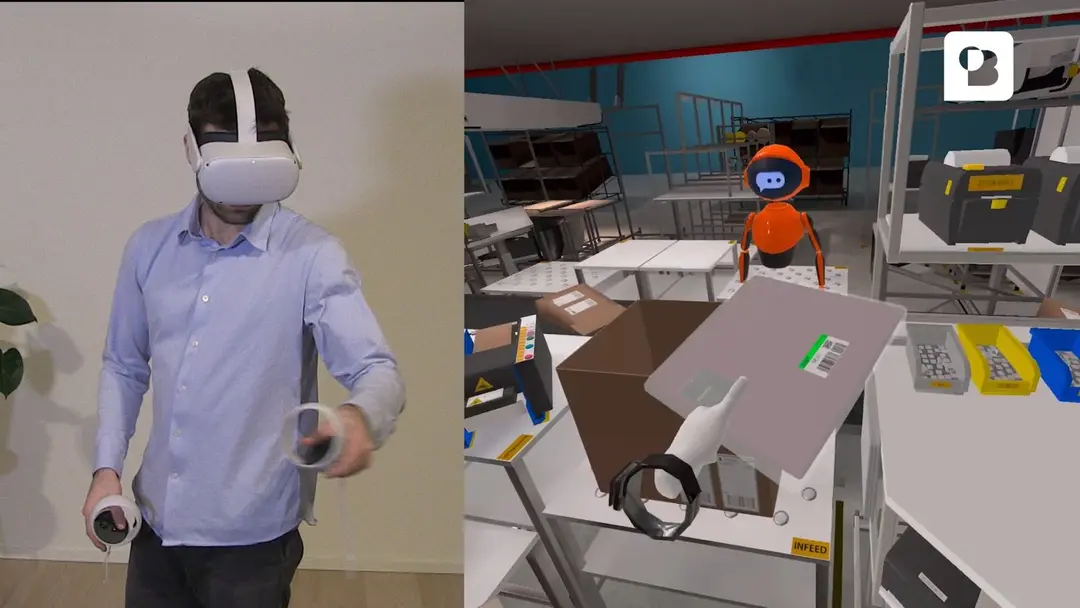
Your procedure is the thing being trained. Nike wanted new warehouse staff to learn its packing process. There is no generic version of that. We recreated the packing line as a 1:1 virtual environment where a virtual avatar guides trainees through every step. Onboarding went from five days to two, and no new physical training area was needed.
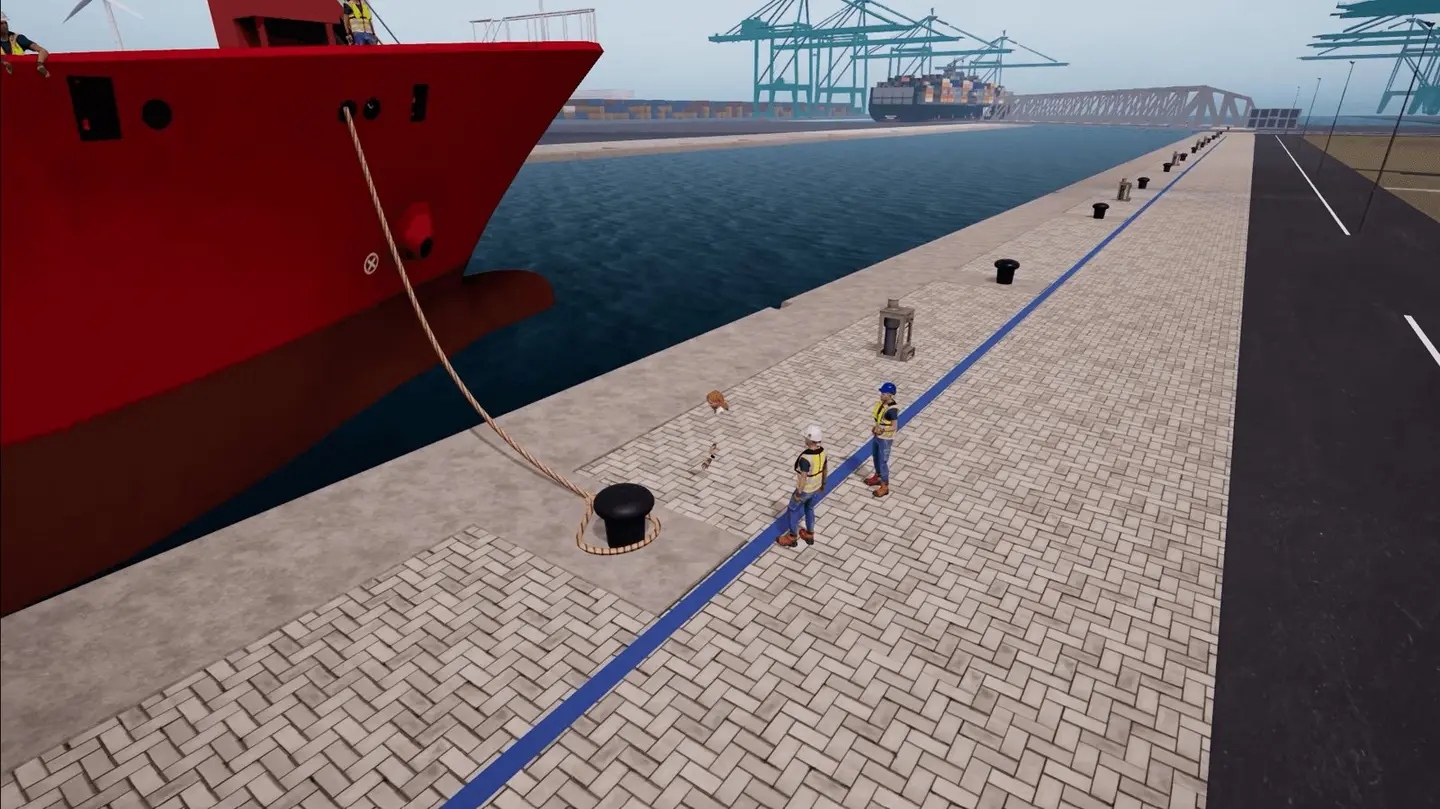
The environment is the hazard. Mooring a ship in the Port of Antwerp is dangerous because of where you stand when a cable is under tension. The training uses a digital twin of the harbour, and shows what happens when a cable snaps. A dock worker put it like this:
I'll never forget the moment I saw what happens when a cable snaps in VR, it really drives home the danger.
The generic version misses your risks. Fire training exists off the shelf, yet NMBS, the Belgian national railway, needed hose operations, low-light fires and evacuations inside stations. Its staff face fires in places an office scenario does not prepare them for.
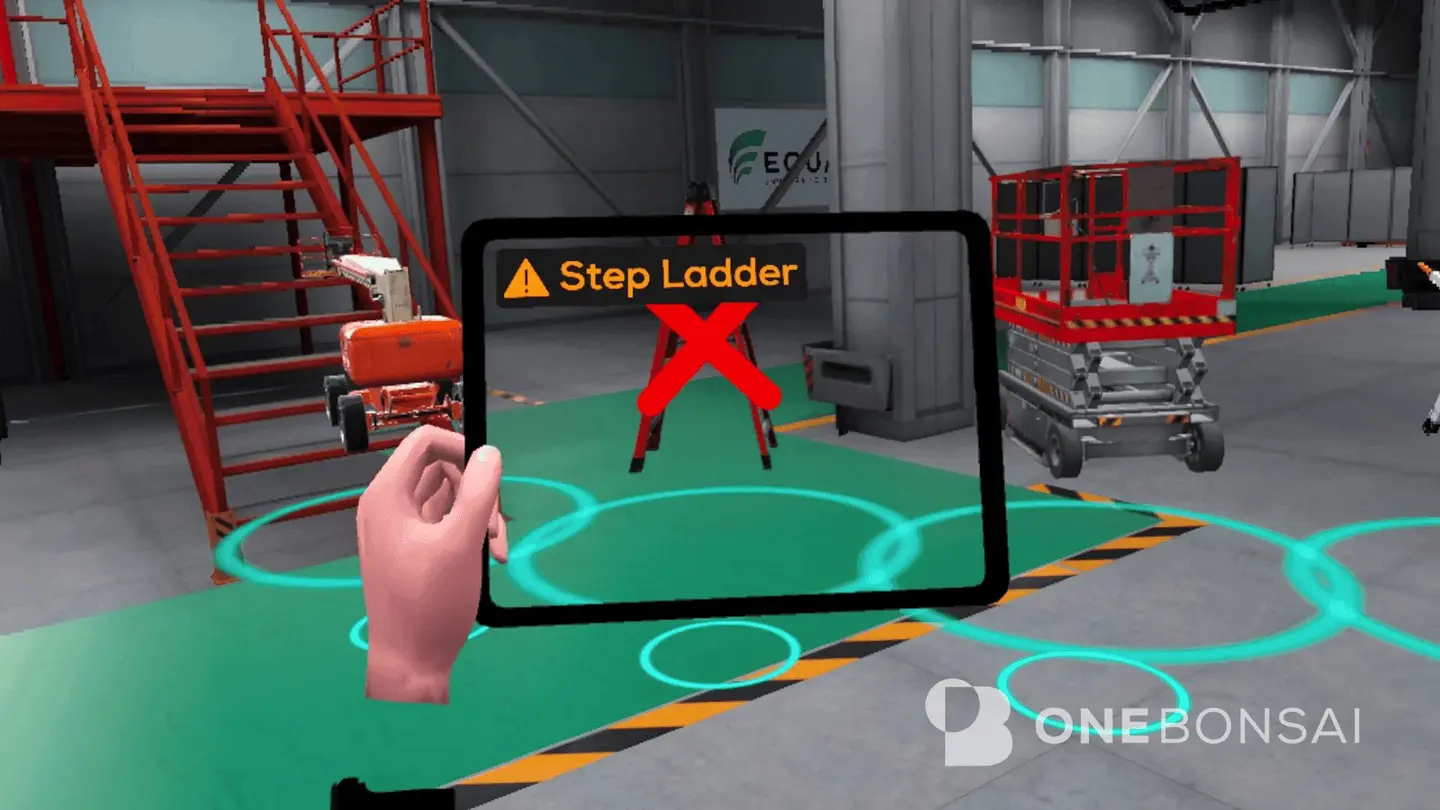
A specific behaviour has to change. Equans had recurring incidents with ladders despite protocols and awareness campaigns. The training we built makes workers choose equipment and set it up, and shows the consequences of an unsafe choice immediately.
In each case, a ready-made module would have taught something true but not the thing that mattered.
The middle route: adapting a module
Between the two there is a third option that is easy to overlook. A ready-made module can be adapted to your site.
Some of this is small. In the fire training, the emergency number used in the scenarios can be changed to your own. Some of it is larger: scenarios adapted to your worksite and procedures, which we quote separately.
This suits organisations whose topic is standard but whose setting is not. If your people need ordinary fire training but work in an unusual building, start from the module and adapt it, instead of starting from nothing.
What each option asks of you
The price is only part of the difference. The two routes ask for different things from your own team.
| Ready-made module | Custom training | |
|---|---|---|
| Start | A subscription and a headset | A project with a scope and a design phase |
| Your team's time | Organising sessions | Subject-matter experts involved throughout |
| Content | The same for every customer | Yours: your procedures, equipment and site |
| Pricing | Published, per headset | Quoted per project |
| Risk if it does not suit | Cancel the subscription | The build is already paid for |
| LMS integration | Performance tracking included | Full integration available |
The line about your team's time deserves attention. Every custom project described here was built together with the client's own people: Nike's team, harbour experts in Antwerp, the NMBS safety teams and Equans' safety experts. Without them the result looks right and teaches the wrong thing. If you cannot free those people, you are not ready for a custom build.
A short checklist
Answer these in order. Stop at the first "yes".
- Is the topic fire, first aid, hazard recognition or cybersecurity awareness, with nothing unusual about your setting? Use a ready-made module.
- Is the topic standard, but your site or procedures differ in ways that matter? Adapt a module.
- Does the training concern a process, machine or environment that exists only in your organisation? Build custom.
- Is a specific, recurring incident the reason you are looking? Build custom, around that incident.
If you reach the end without a "yes", the problem is probably not defined well enough yet. That is worth a conversation before a purchase.
Start small either way
A ready-made module is also the cheapest way to find out whether VR training works in your organisation at all: whether people accept the headset, whether sessions fit into a shift, who will run them. Those answers are the same for custom training, and far less expensive to learn on a subscription than on a project.
Custom work can start small too. The Nike packing simulator began as a proof of concept.
To compare what each route costs, see the guide on what VR safety training costs and returns, or browse the case studies for projects close to your own.