Completion rates say who attended, not what changed. Four levels of evidence for VR training, and which numbers to collect at each.
Sooner or later somebody asks whether the VR training worked. The usual answer is a completion rate and a satisfaction score: nearly everyone did the session and most of them enjoyed it. That tells you who attended. It does not tell you whether anything changed.
Measuring training properly is not complicated, but it has to be planned before the first session. This post walks through four levels of evidence and what to collect at each.
Four levels of evidence
The most widely used model in training evaluation is Kirkpatrick's, and it is a good checklist:
- Reaction. Did people find it relevant and worth their time?
- Learning. Can they do something they could not do before?
- Behaviour. Do they do it at work?
- Results. Did the organisation's numbers move?
Each level is harder to measure than the one before, and more convincing. Most organisations stop at level one.
Level 1: reaction
Reaction is fast and cheap to measure, and it is the weakest evidence. It is especially weak for VR, because a headset is still a novelty. People enjoy it the first time. That means they will turn up, not that they learned.
Ask two or three questions straight after the session, and make them about the work, not the experience:
- Did the scenario look like something that could happen in your job?
- Is there anything you would now do differently?
- Did you feel unwell at any point?
The last one matters. A small number of people experience motion sickness, and you want to know how many before you scale up.
Level 2: learning
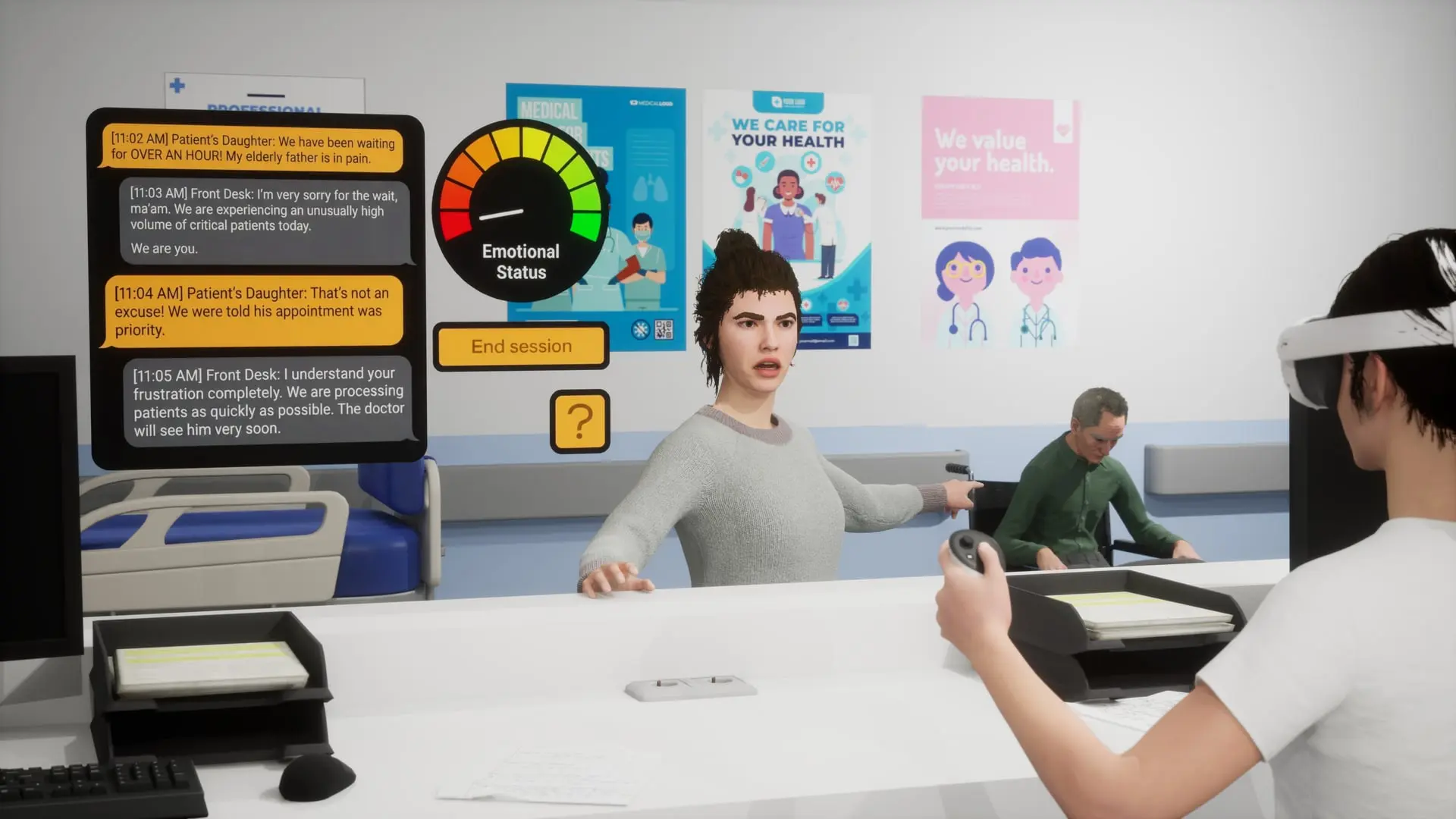
This is where VR has an advantage over a classroom. A trainer cannot watch thirty people at once. A headset sees everything one person does.
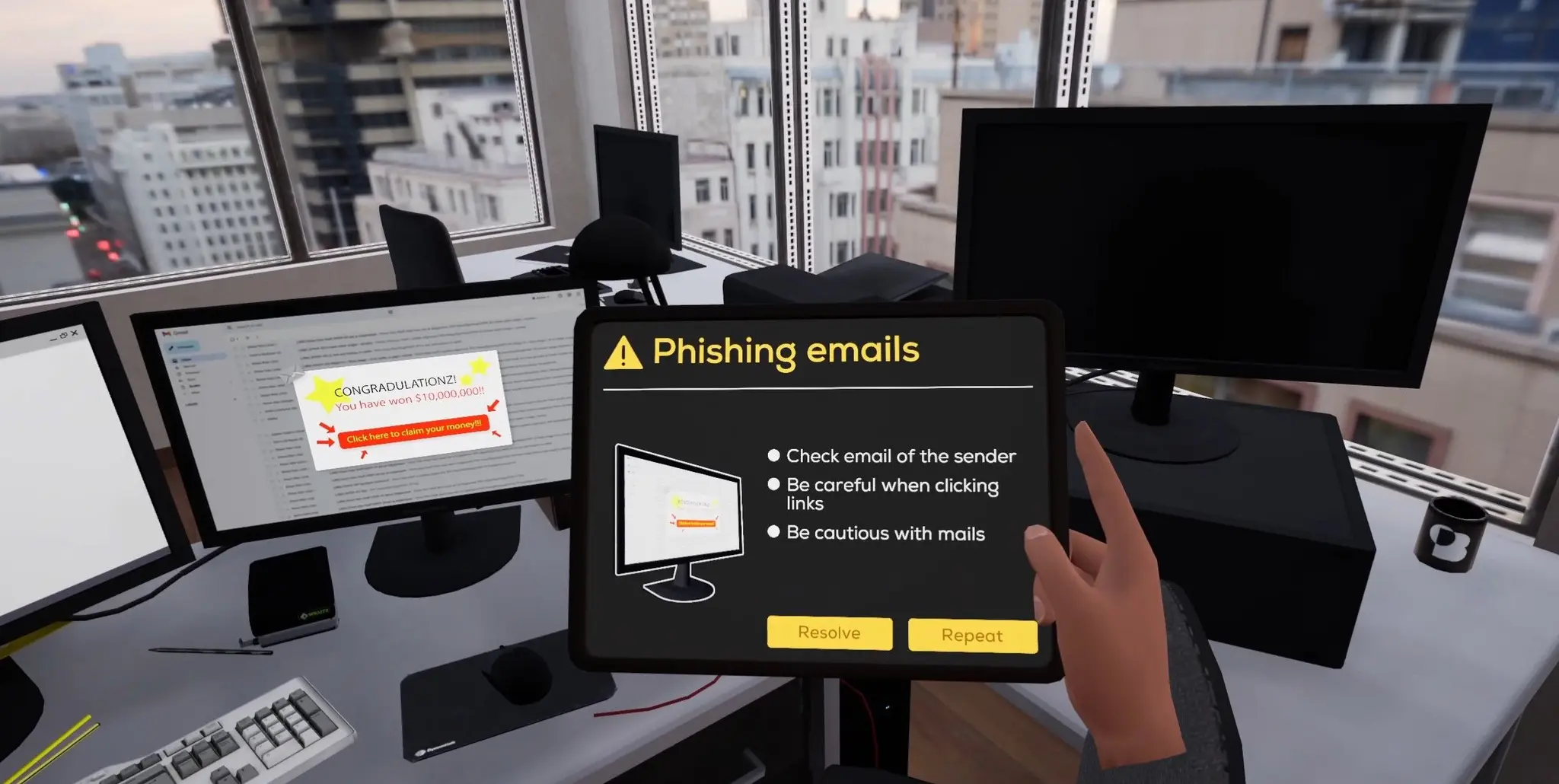
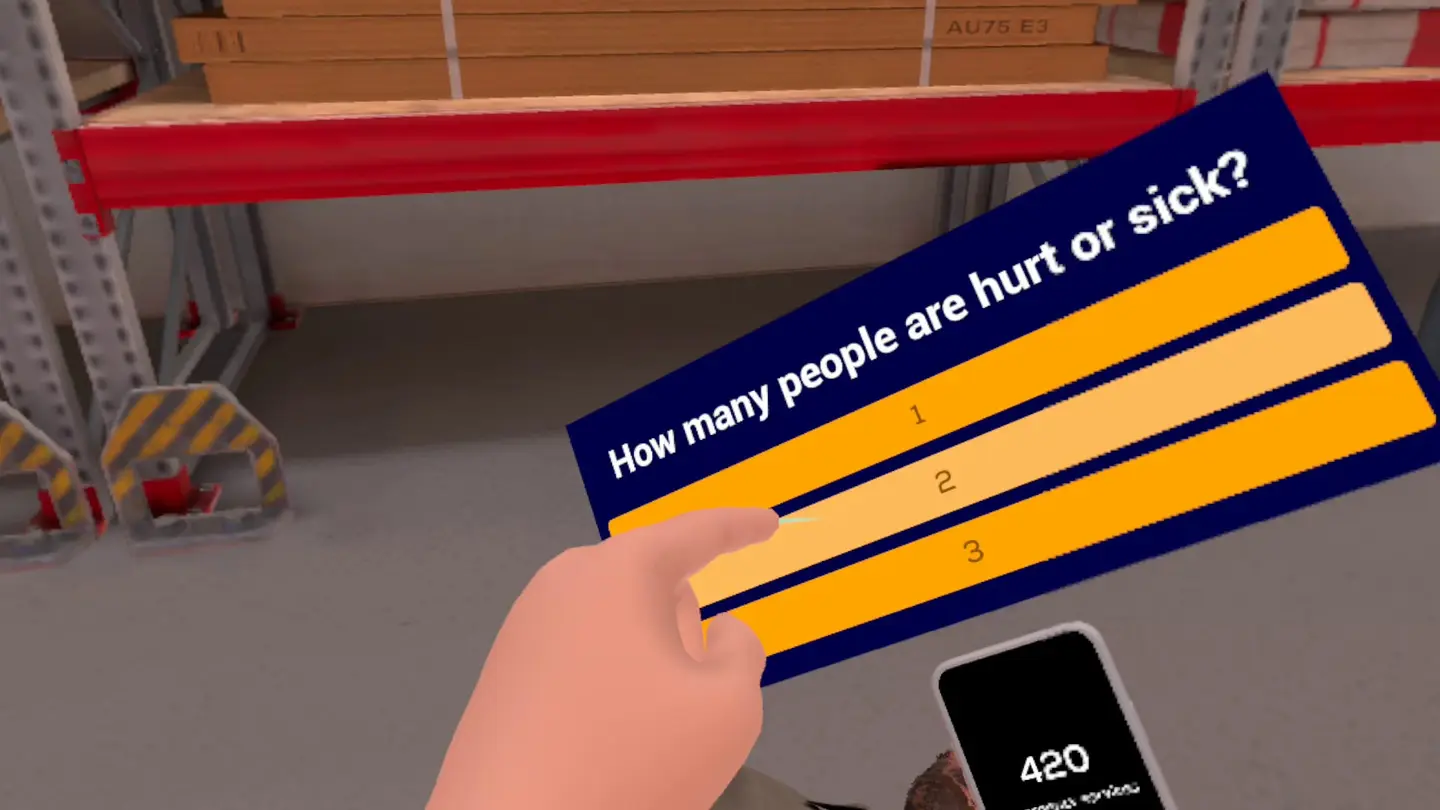
Our ready-made modules include performance tracking and feedback, and the cybersecurity module ends with an exam level. Ask any supplier to show you the report before you buy: what is recorded per person, and in what form you get it.
Three comparisons are worth making:
- First attempt against second. The difference within one session is the quickest sign that people are learning and not guessing.
- Now against later. Run the same scenario again after 30 and after 90 days. What people still do correctly then is what they will do in a real incident.
- VR against what you did before. If you can, train one team the old way and one in VR, and give both the same test.
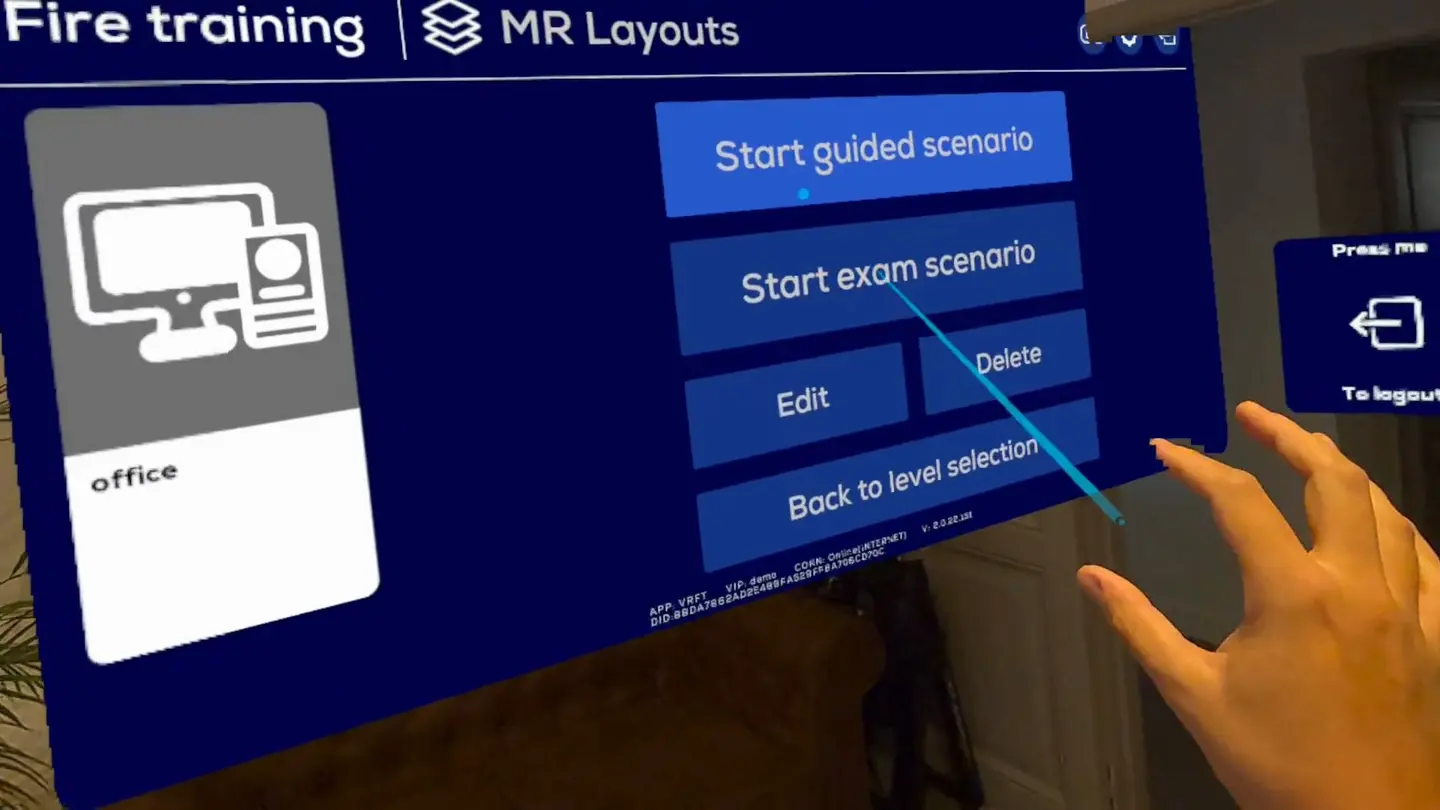
Independent evidence helps here too. A master's thesis on our first aid module, published at Mensch und Computer 2025, found gains in self-efficacy, knowledge retention and transfer to practice for learners who trained in VR. We wrote about it in VR first aid training proven effective.
Level 3: behaviour
A good score in the headset is not yet a change at work. To measure behaviour, pick one thing you can observe and check it on the floor.
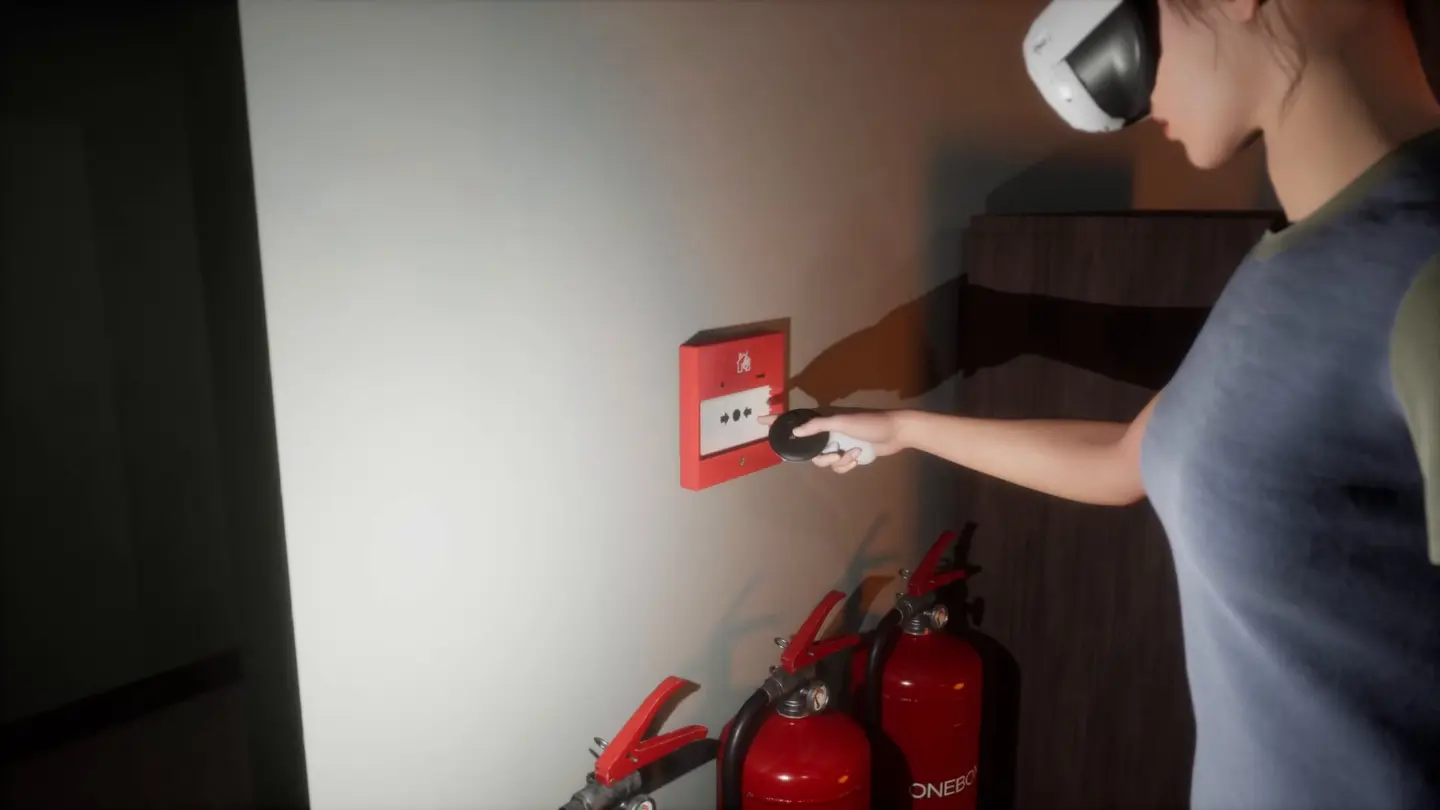
For a ladder safety programme, that could be which equipment people choose for a job at height. Our training for Equans works on exactly that decision: workers choose the equipment and set it up, and the simulation shows the consequence of an unsafe choice. The measure at work is the same choice, observed during a normal inspection round.
Other sources you probably already have:
- safety observation rounds and audits
- near-miss reports, where a rise shortly after training can be a good sign: people notice more
- supervisor observations, with a short fixed checklist
For skills where behaviour is the whole point, such as police interventions, the platform itself can support this level. In VRTS, instructors watch live, annotate behaviour and run a structured review, and performance metrics give a more objective view than an impression.
Level 4: results
Results are the numbers management cares about. They fall into two groups.
Efficiency results appear quickly. Nike cut warehouse onboarding from five days to two when it moved packing training into VR. Securitas replaced 20% of its traditional fire training sessions with the VR version within months. These are easy to measure because you control them: days, sessions, travel, cost per trained person.
Safety results appear slowly. Incidents are rare, which is the goal, and rare events make poor statistics. One bad month proves nothing, and neither does one good one. Compare a full year against the year before, look at near misses as well as accidents, and be careful about claiming credit.
Take the baseline first
Every comparison above needs a "before". Write these down before the first session:
- what the current training costs per person, and how long it takes
- how many people were trained last year
- last year's incidents and near misses for the topic
- the result of the last audit or observation round
Nobody remembers these accurately afterwards, and nobody believes a baseline that was reconstructed to fit the result.
Individual scores are personal data
A system that records how each employee performed is recording personal data. Decide in advance who can see individual results, and tell people. Involve the works council or employee representatives where you have them.
Our advice is to use individual results for coaching and repeat practice, and to report to management only in aggregate. Training works when people dare to make mistakes in it.
The one-page report
When the question comes, answer it on one page:
- What we trained, how many people, and what it cost against the previous method.
- What people could do afterwards, and what they still did correctly after 90 days.
- What we observed at work.
- Which results moved, and which need more time.
- What we will change.
For the cost side of that page, our guide on what VR safety training costs and returns includes a worked example per trained person. The case studies show what other organisations measured.