Role-play with colleagues only goes so far. How AI-driven virtual patients and suspects let healthcare staff and police practise de-escalation.
De-escalation is a skill most people discover they lack at the moment someone is shouting at them. Nurses, receptionists, paramedics and police officers are all expected to calm a situation down, and most of them learned how from a slide deck and an afternoon of role-play.
This post is about what changes when the other person in the exercise is an AI-driven character in virtual reality, and where the instructor still does the real work.
Why role-play with colleagues falls short
Role-play is the standard method, and it has three problems.
It is not frightening. The angry patient is a colleague you had lunch with. Both of you know how the scene is supposed to end.
It cannot be repeated. No two run-throughs are the same, so you cannot try a different opening against the same reaction and compare.
The alternative is not available. Practising on real distressed patients is limited and ethically constrained. You cannot schedule an aggressive visitor for Tuesday at ten.
The result, in the words of one healthcare client:
Our staff were often unprepared for aggressive patients, and traditional training lacked the realism to build real confidence.
What changes with an AI-driven character
In the VR training we built for healthcare staff, the patient is a generative AI avatar. It has an emotional state, such as anger, fear, confusion or distress, and it responds to what the trainee says and does. There is no fixed script. The same opening sentence can lead to a different conversation, depending on how it is said and what follows.
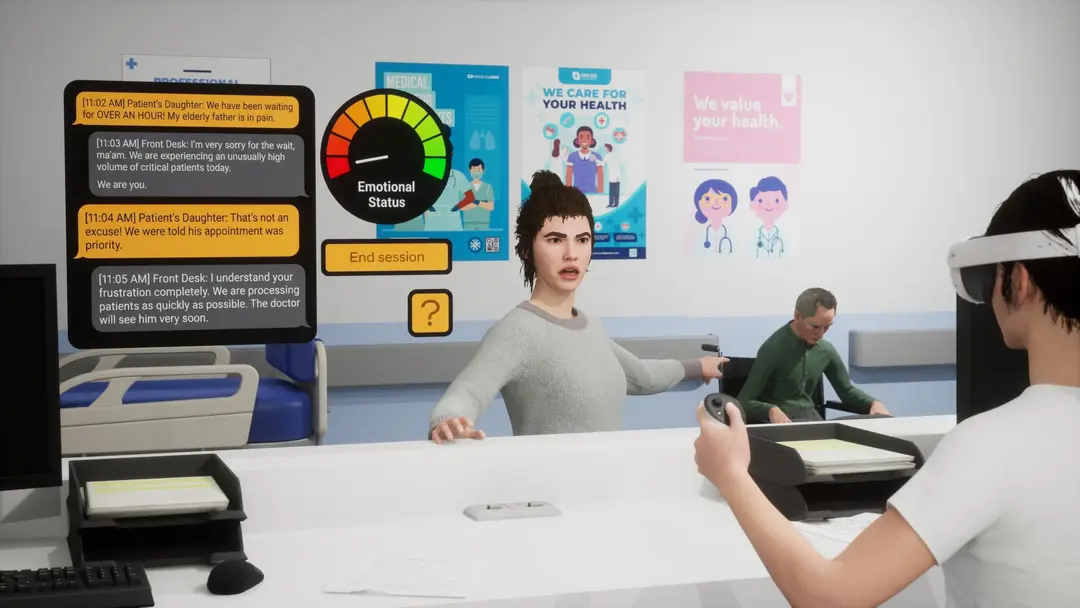
The image at the top of this post shows one scenario. The trainee works a hospital front desk. A woman has been waiting with her elderly father, and opens with: "We have been waiting for OVER AN HOUR! My elderly father is in pain." The trainee answers in their own words. The conversation appears as a log, and a gauge shows the visitor's emotional status as it rises or falls.
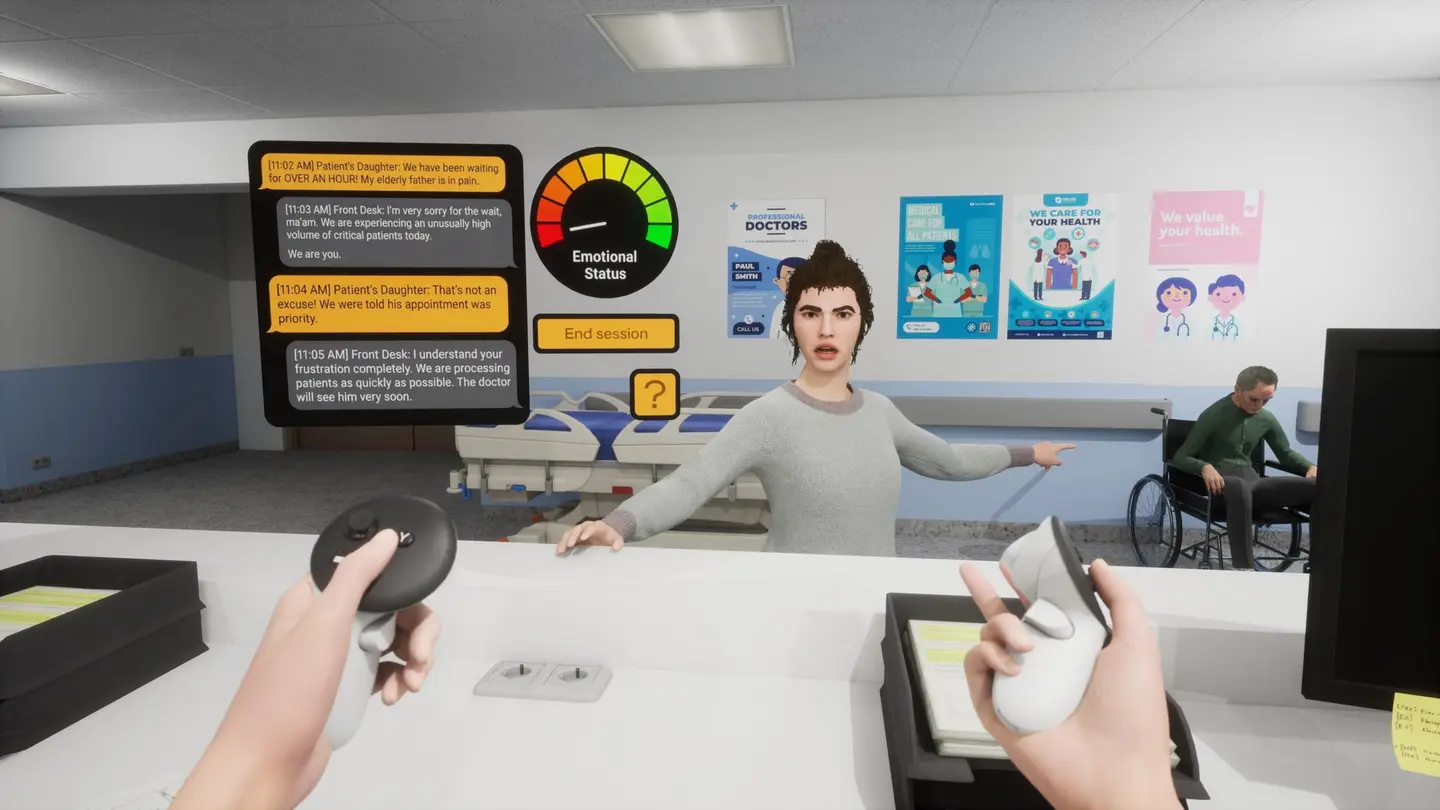
A memorised phrase is not enough here. Because the character's next line depends on what was just said, the trainee has to listen. That is the point of using a generative model.
What trainees practise
The scenarios were designed together with healthcare professionals, psychologists and de-escalation experts, and each one targets specific skills:
- Active listening: picking up what the person is really upset about.
- Empathy: acknowledging it in a way that is believed.
- Assertive boundary-setting: saying what is and is not acceptable without raising the temperature.
- Crisis intervention: recognising when to stop talking and get help.
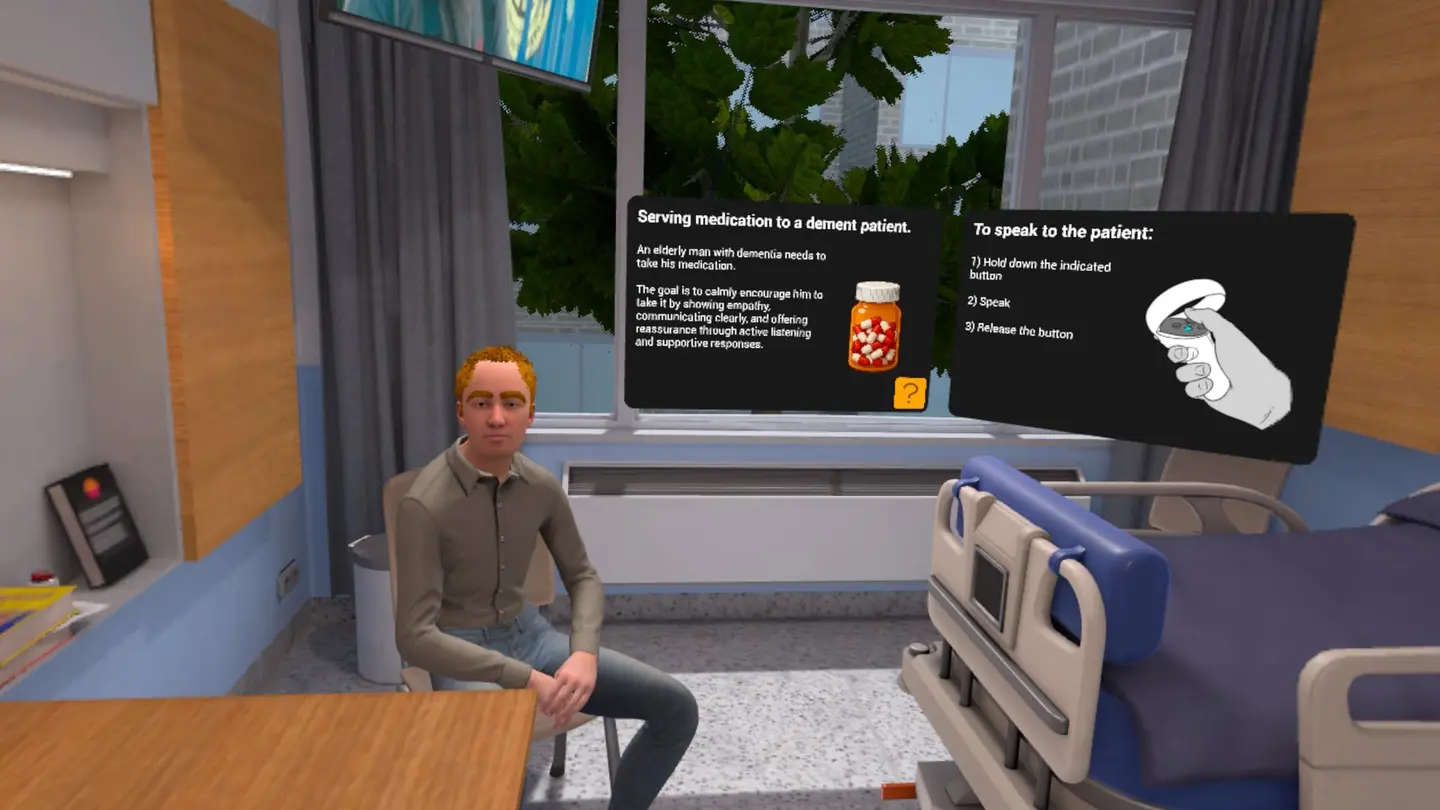
After each session the trainee gets immediate feedback on their de-escalation technique and how effectively they communicated. Because the session is virtual, they can go straight back in and try again.
The same idea in police training
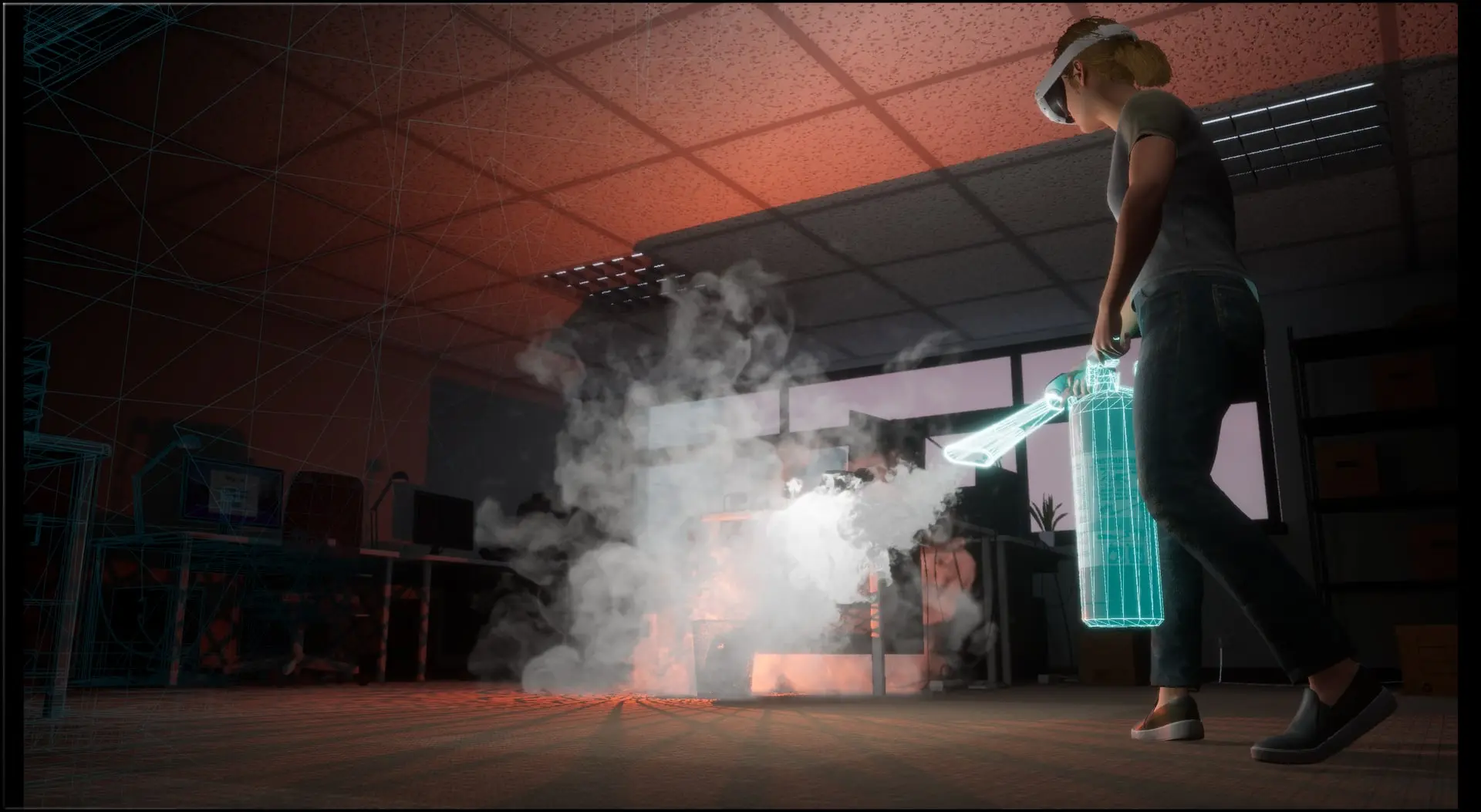
For police the stakes are different, but the mechanism is the same. In VRTS, the police training platform we co-developed with the Belgian Police, digital humans react to what the officer does. Calming a suspect or a bystander becomes something to practise, not only to discuss in a classroom.
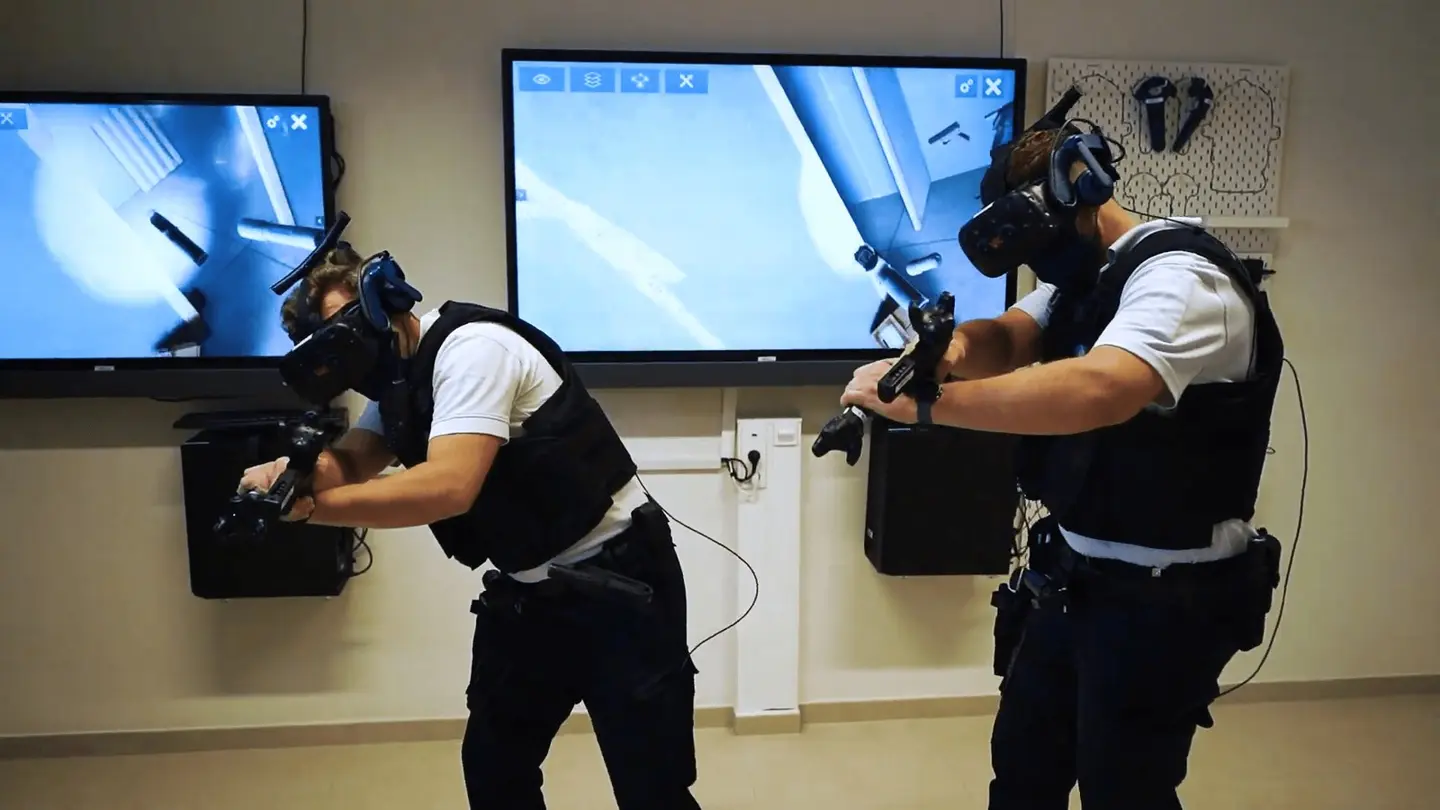
Scenarios range from a single intervention to a coordinated team operation. Instructors can write their own scenarios with built-in editing tools and scale the difficulty to the officer's experience. Officers who trained this way report feeling more confident in de-escalating conflicts and in making decisions under stress.
The instructor still does the real work
An AI character gives a trainee something to react to. It does not replace the conversation afterwards.
In the police platform, instructors watch live, annotate behaviour and run a structured review after the scenario. The same pattern works in healthcare:
- The instructor chooses a scenario that fits the trainee's level.
- The trainee goes through it once, uninterrupted.
- The two review it together: what was said at the moment the situation turned, and what else could have been said.
- The trainee repeats the scenario and tries the alternative.
Step four is what role-play cannot offer. It is also where most of the learning happens.
What to measure
Be honest about what the evidence is. In our healthcare project, trainees reported feeling better prepared, less anxious and more empathetic after the programme. Those are self-reported results, and they matter: a nurse who is less anxious is more likely to stay calm.
Three measures are worth collecting, in order of difficulty:
- Confidence before and after, with the same short questionnaire.
- Observed performance, by an instructor scoring a repeat of the same scenario some weeks later.
- Incidents at work, over a long enough period to mean something. This is the measure that counts, and the slowest to show anything.
Practical points
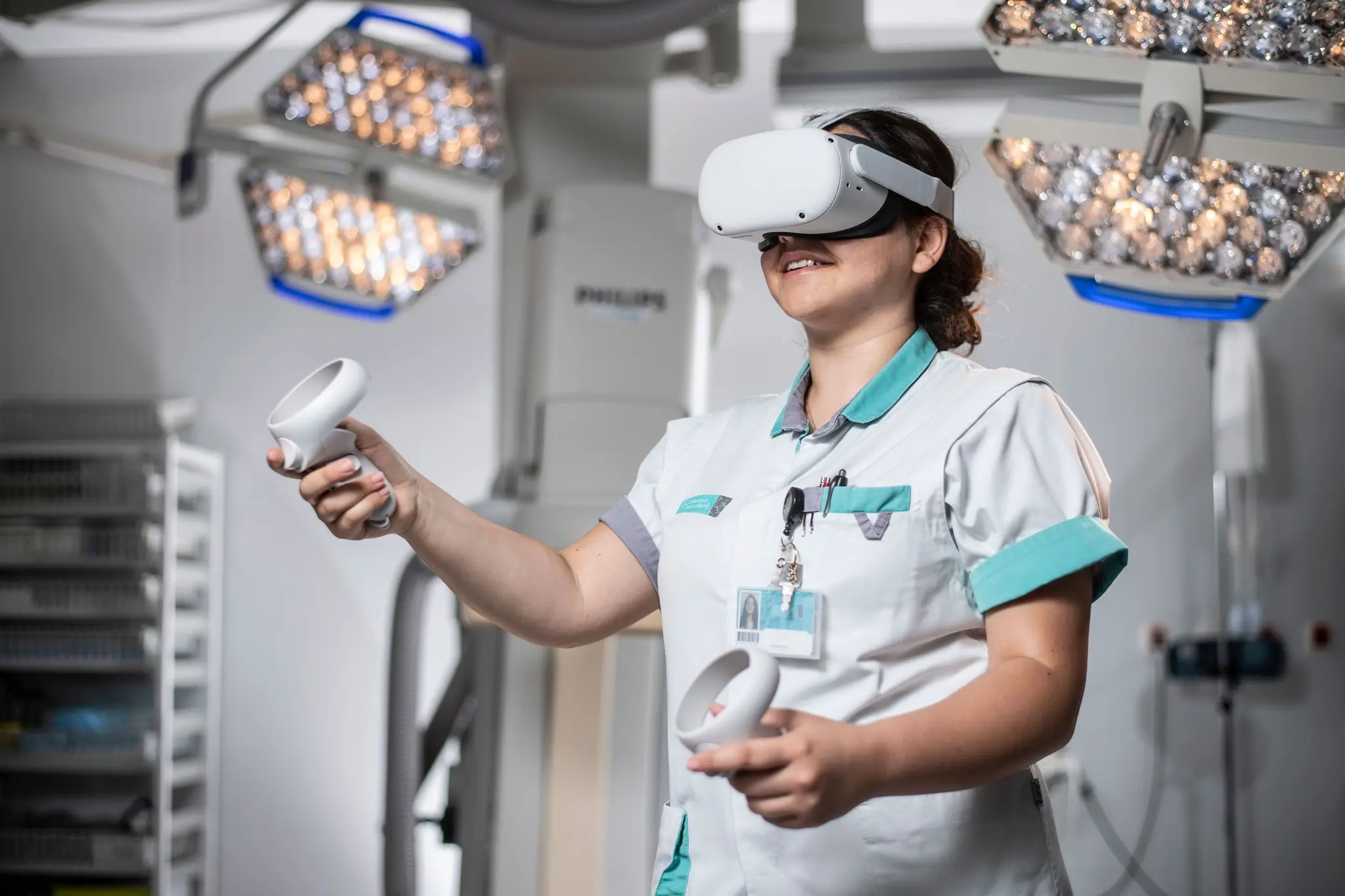
- Hardware. The healthcare training runs on mobile VR headsets, so it can be used in a hospital, a school or a training centre.
- Where the AI runs. In that project the AI runs on GPU-powered cloud infrastructure, so sessions need a network connection. Ask any supplier where speech is processed and what is stored.
- Keep sessions short and let people stop. A convincing aggressive character is unpleasant by design, and some staff have experienced the real thing.
- Start with volunteers from the team that needs it most, such as emergency or reception staff, and let them tell the others.
To read more, see the de-escalation training case study, our page on police VR training, or how the same technology is used for digital patients in medical education.