Which nursing skills suit VR, which still need a skills lab or a ward, and how hospitals fit a headset into an existing curriculum.
Nursing education has a capacity problem. Skills labs are booked, mannequins are shared, supervisors are short of time, and nobody wants a student's first attempt at a procedure to be on a patient. When the University Hospital Bonn had to train 1,000 newly hired nurses and 600 nursing students, more classroom hours were not going to solve it.
VR is one answer, but not for everything. This post sets out which nursing skills a headset teaches well, which it does not, and where it belongs in a curriculum.
What suits a headset
Procedures with a fixed order. A great deal of nursing is doing the right steps in the right sequence. In the programme we built for Bonn, every module starts with hygienic preparation, such as hand disinfection and gloving. Students then measure blood pressure, pulse, temperature and oxygen saturation and log the findings on a virtual documentation tablet. In another module they do medication calculations and set up an infusion under sterile conditions, including what to do about a clogged catheter.
Assessment and documentation. In the pain recording module, the patient is an avatar with realistic verbal pain reactions and reflexes. The student inspects the pain sites and documents what they find. In the chronic wounds module they inspect a wound, change the dressing and answer diagnostic questions.
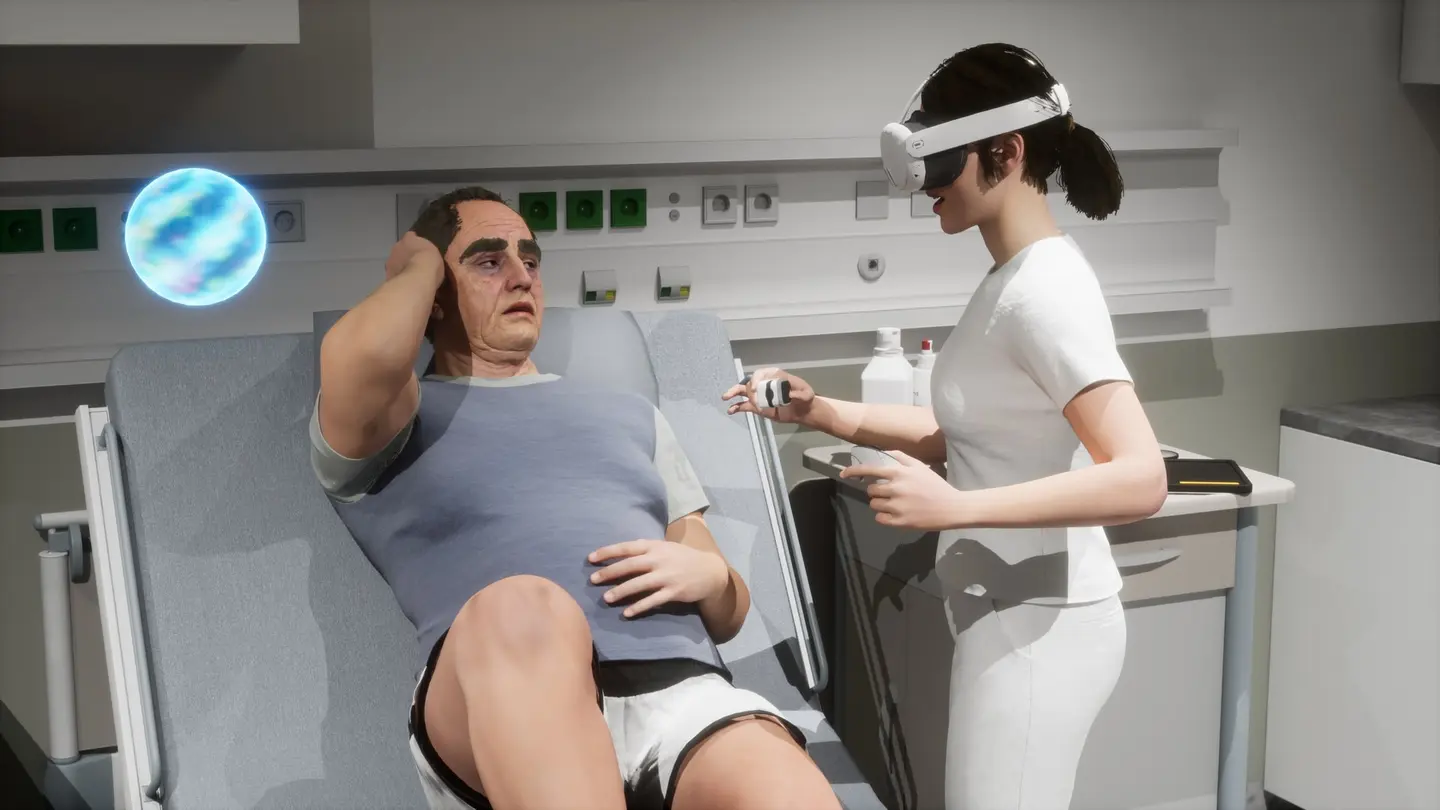
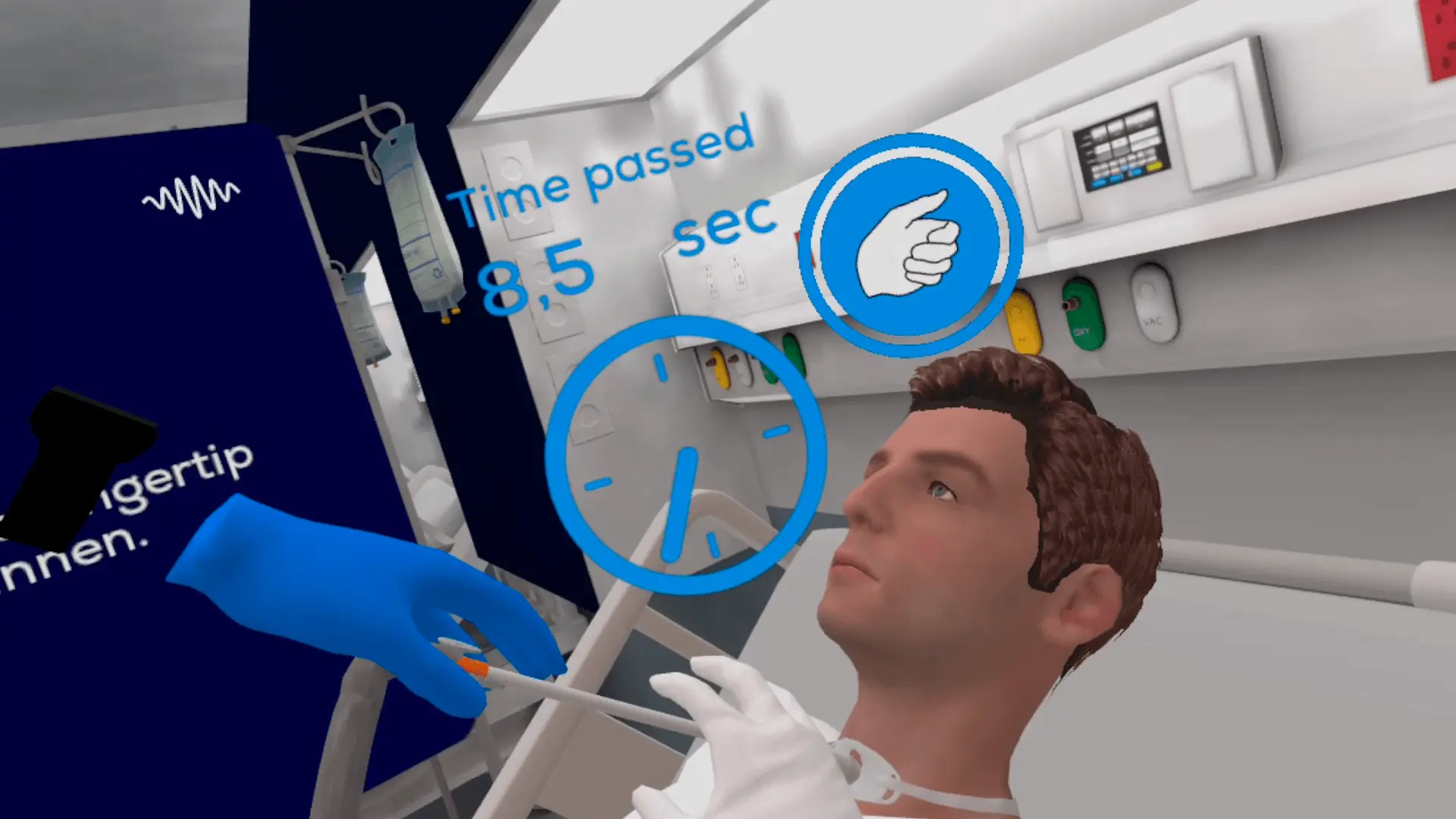
Rare and high-risk situations. Some things cannot be practised on the ward because they must not go wrong and seldom happen. Tracheostomy care is an example. In our TracheoCare training, staff practise routine care and emergencies such as clearing an obstruction, across common and rare complications. One nurse described the effect:
I feel much more confident handling emergency tracheostomy care after practicing in VR.
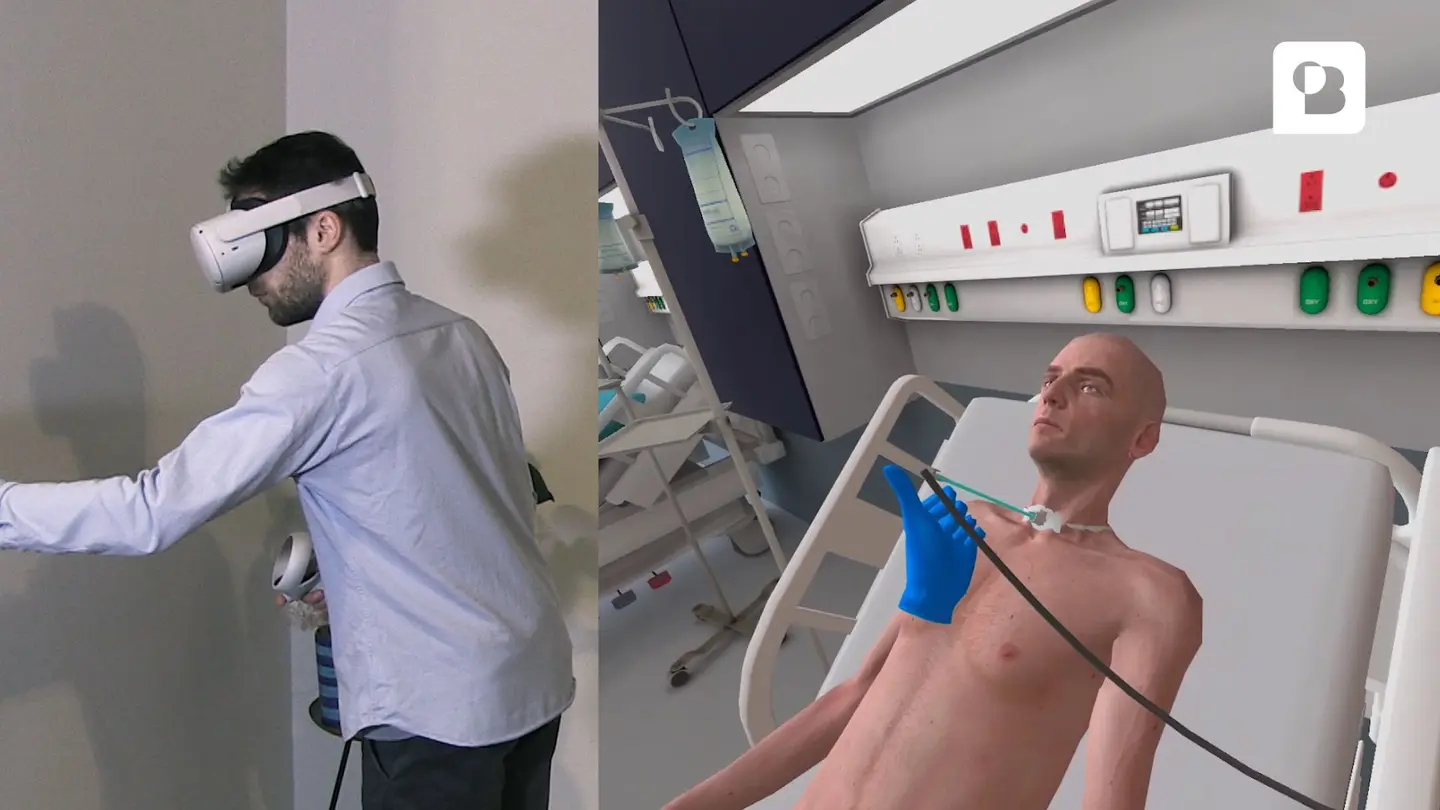
Patients you cannot practise on. Training on children is rarely possible. PaediatricPro, which we developed with SyncVR Medical with support from CrossRoads and the European Union, simulates procedures such as nasogastric tube insertion, PICC line placement and IV set-up for paediatric nurses.
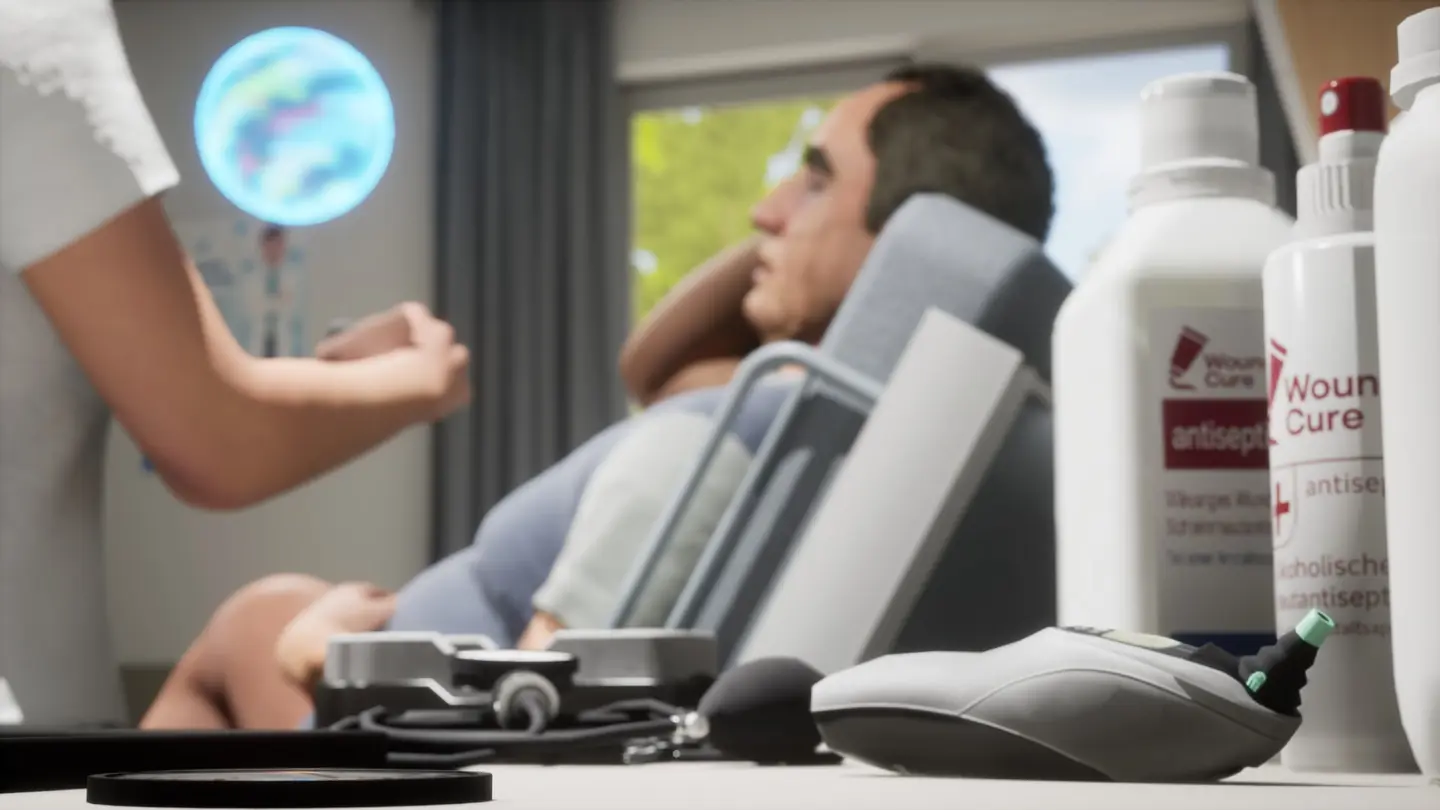
Protocols. For GS1 we built a module in which nurses practise bedside scanning: scanning patient IDs, medication and records, in the order the protocol requires.
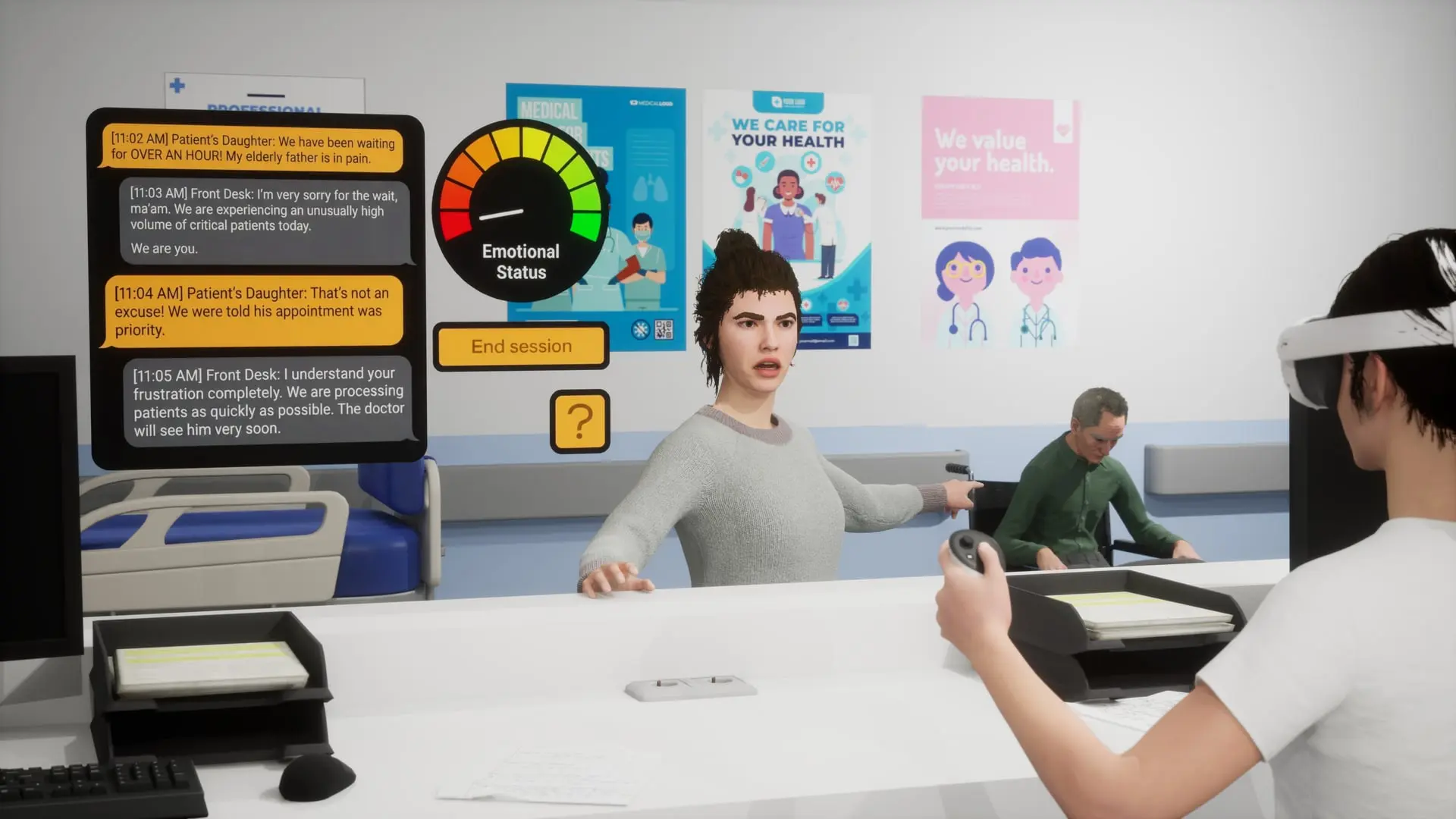
Difficult conversations. AI-driven virtual patients respond with emotion to what the trainee says and does, which lets staff practise calming an aggressive or distressed patient.
What still needs a skills lab or a ward
A headset has limits, and a curriculum should be built around them.
- Touch. Controllers stand in for instruments, but they do not give you the resistance of skin, a vein or a tube. VR teaches the sequence and the decisions. The feel comes from a mannequin, and then from supervised practice.
- Physical handling. Lifting, turning and supporting a patient is bodily work that a headset cannot reproduce.
- The ward itself. Several patients at once, interruptions, a handover, a colleague asking for help. VR scenarios are focused on one patient and one task.
- Real people. A frightened patient or an anxious family responds to presence, not only to words. Simulation prepares for this. It does not replace it.
The practical conclusion is that VR works best before the skills lab, not instead of it. A student who arrives knowing the steps can spend the lab hour on the part that needs hands.
Fitting it into a curriculum
Three design choices made the Bonn programme usable for 1,600 people.
It follows an instructional design framework. The modules are built on 4C/ID, which breaks complex tasks into procedural information and part-task practice. Students are not dropped into a full scenario on day one.
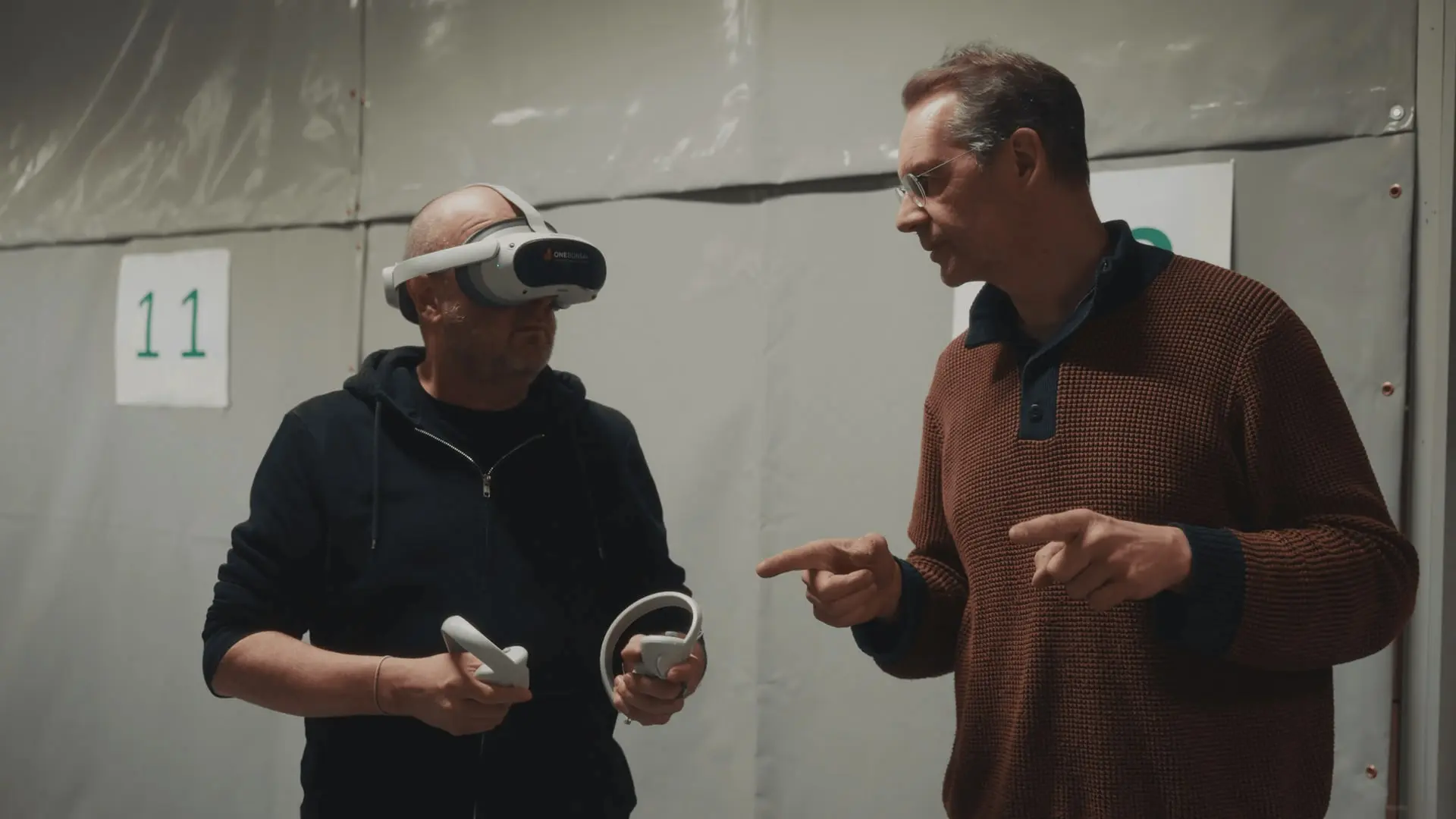
The instructor stays in control. A virtual instructor platform lets trainers follow students live, step in, and set patient parameters such as vital signs, skin colour and breathing before a session. A trainer can supervise without being in the room.
Results go into the learning management system. The hospital captures training data and tracks student results over time, so VR practice counts in the same record as everything else.
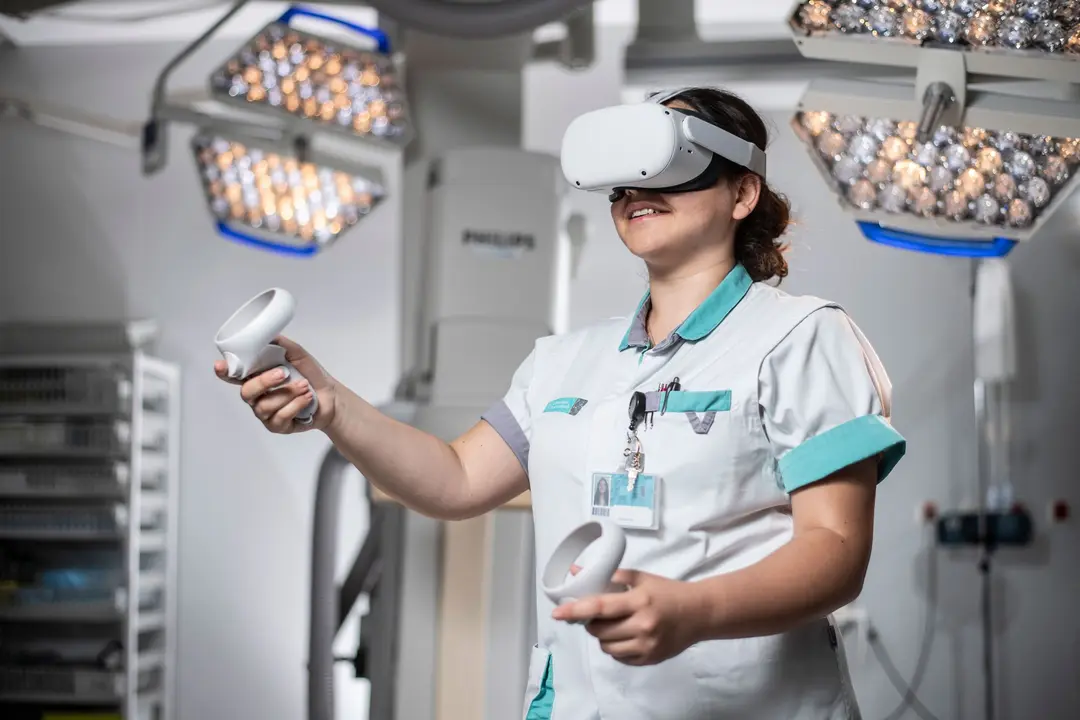
The training takes place in a digital twin of one of the hospital's own patient rooms, on Meta Quest 3 and Pico 4 Enterprise headsets. The room is already familiar when students reach the ward.
International and newly hired nurses
Many hospitals recruit abroad, and new colleagues arrive with different training backgrounds. The Bonn programme was built for domestic and international students, including students from partner institutions in Mexico, and supports training in German and English.
The benefit is standardisation. Everyone practises the same procedures, to the same local protocol, before their first shift, and they do it without risk to a patient.
Questions to ask before you start
- Which procedures cause the most errors or anxiety in your new starters?
- Where is the bottleneck now: lab time, supervisors, or access to patients?
- Which of those procedures are mainly about sequence and decisions, and which are about touch?
- Who will supervise sessions, and do they need to be in the room?
- Should results appear in your learning management system?
The answers decide whether you need a few modules or a programme. Our page on VR training for nurses and paramedics describes the modules, and the University Hospital Bonn case study covers the programme in detail.