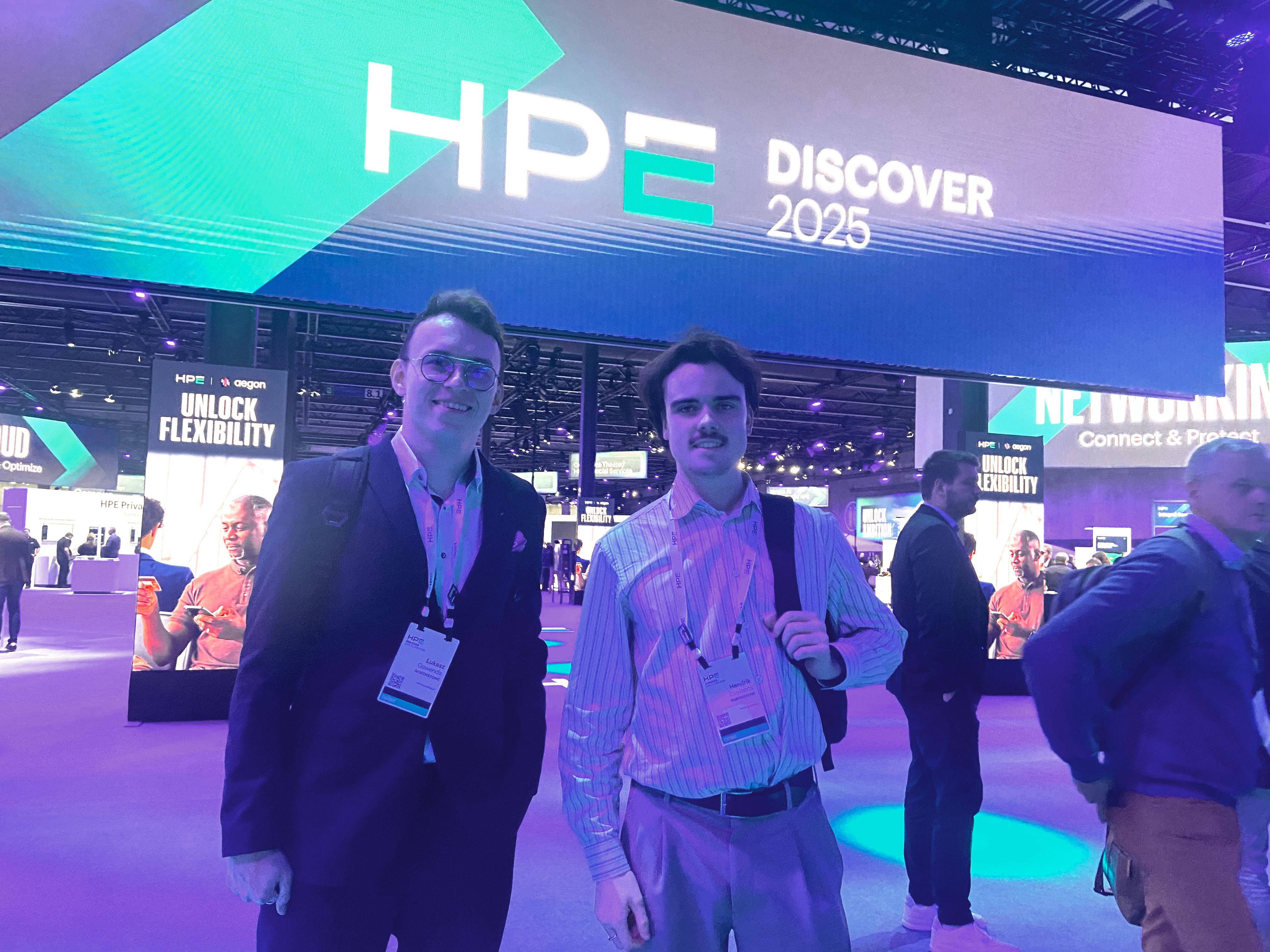
Hendrik and Lukasz are freshly back from HPE Discover Barcelona 2025
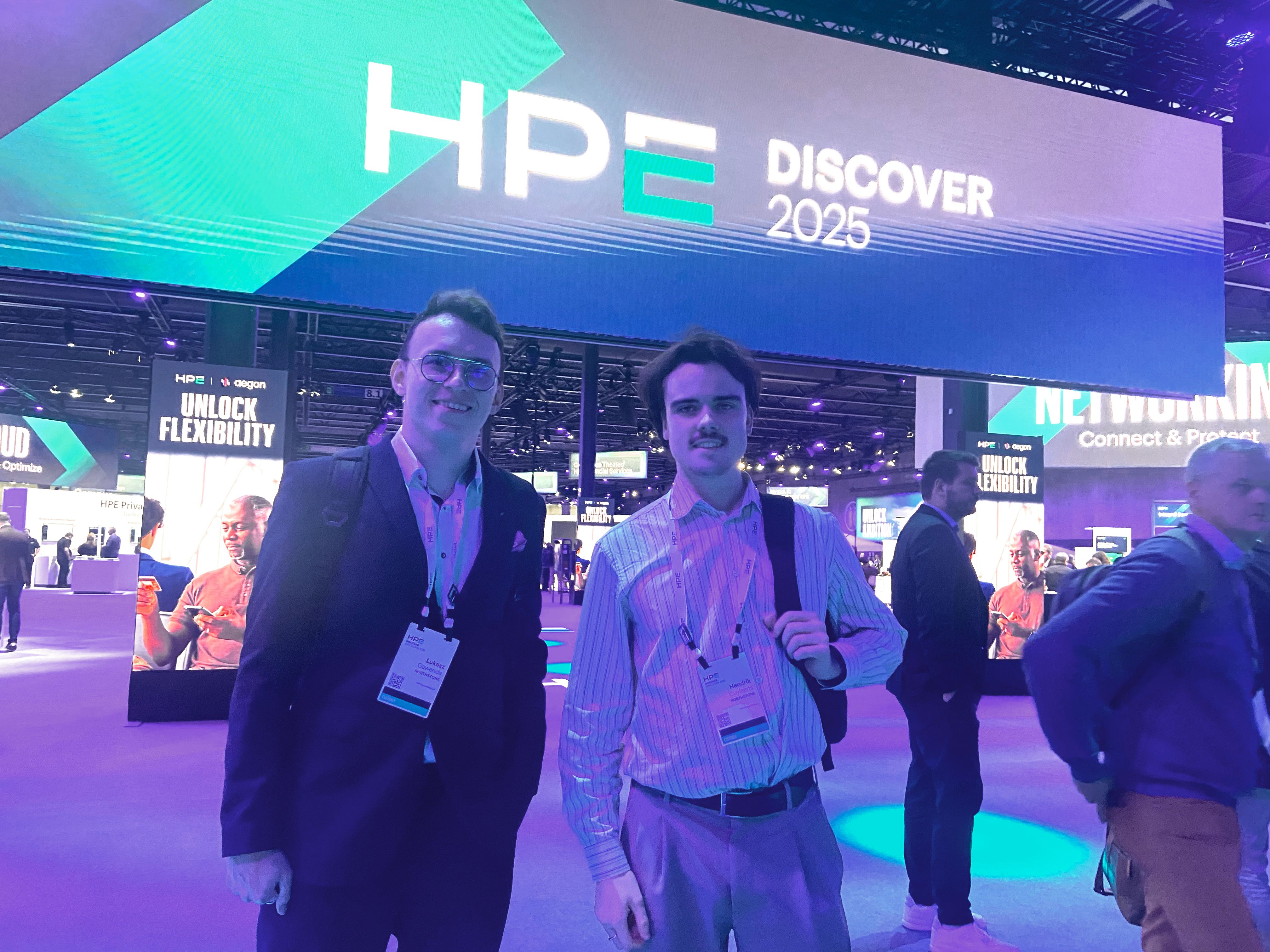
Hendrik (Business Developer) and Lukasz (AI Engineer) are freshly back from HPE Discover Barcelona 2025. The event was held on the 3–4 December at the Fira Barcelona Gran Via, one of the largest and most modern venues in Europe.
OneBonsai didn’t only choose to attend this event because of the sunny city, but because of their partnership with Hewlett Packard Enterprise (HPE). This global enterprise technology company helps organizations to build reliable IT infrastructure. More specifically HPE designs and builds servers and compute infrastructure that business can use to run applications, databases and complex workloads. For OneBonsai this infrastructure is critical to run our high-performance computing systems, like AI Agents.
At the event OneBonsai took a deeper look into possibilities of using HPE’s private cloud AI that is designed to bring a cloud-like operating model into your own data centers, edge locations, or colocation facilities. At OneBonsai we especially value data security, the agility and self-service capabilities of the public cloud is an essential to be in full control of security, and performance just like an on-premises infrastructure. When combined with edge infrastructure (like POD solutions), Private Cloud AI lets organizations run AI workloads very close to where the data is created, this reduces latency and improves responsiveness for edge-centric applications (e.g. real-time analytics, digital humans, manufacturing automations and more).
On top of the private cloud AI, the HPE AI MOD POD is an interesting piece of hardware that is essentially a modular, high-performance data center in a box designed to support AI workloads. It is a modular data center solution built for intensive AI training that comes in a contained format with a lot of computing power (up to 1.5 MW per unit).
Of course, when we saw a digital human at HPE Discover, we couldn’t resist interacting with it. In the photo you can see Lukasz “talking” to Rami Rahim (CEO of Juniper Networks). Even if the lip synchronization of this interactive digital human wasn’t quite as refined as the versions we built at OneBonsai. Still, the demonstration was a great example of how digital humans are becoming important tools for real-world engagement.
Digital humans are increasingly being used to provide immersive and personalized interactions, from events and hospitality to retail and customer service, they answer questions and guide users in a way that feels both natural and engaging. Whether greeting visitors at an event, acting as a virtual concierge at a hotel reception, or helping customers learn about products and services on a store floor, digital humans are reshaping how brands interact with people and deliver basic information at scale.
And guess what? Digital humans weren’t the only virtual technology present at HPE Discovery, also VR was very much there. In the picture below you see Lukasz looking at a virtual data center, a modern way to explain how datacenters work and how the large amount of heat is removed using liquid cooling.
On top of this we had some interesting conversation with Iveta Lohovska (Chief tech AI – HPE) about AI factories and scaling local AI inference. And with Dale Brown, an experienced AI business manager who did 2 successful AI exits in North-America, about how to scale and futureproof your AI company.